





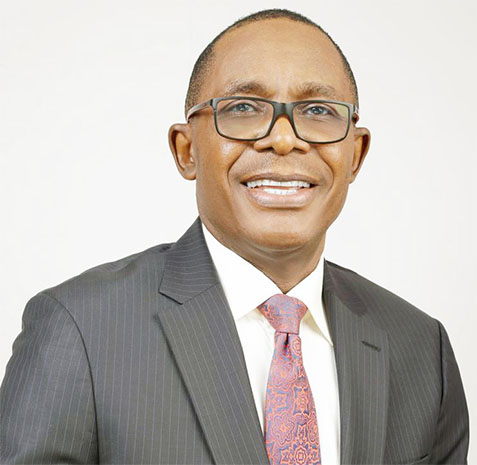
Nigeria’s financial sector has entered a new phase of leadership and reform as the Minister of Finance and Coordinating Minister of the Economy, Mr. Wale Edun, officially inaugurated the new executive management of the Nigeria Deposit Insurance Corporation (NDIC) in Abuja.
The inauguration, held at the Ministry of Finance headquarters, saw Mr. Thompson Oludare Sunday appointed as the Managing Director/Chief Executive Officer of NDIC, alongside Dr. Kabir Sabo Katata, who takes over as Executive Director of Operations. Both appointments are being hailed as strategic steps to fortify Nigeria’s financial safety net and enhance depositor protection.
Reinforcing Confidence in the Financial System
In his address, Minister Edun emphasized NDIC’s critical role in maintaining financial system stability, especially as the federal government continues efforts to consolidate economic reforms and boost investor and depositor confidence.
“The NDIC is more than a regulatory agency—it is a key pillar of trust in our financial system,” Edun said. “At a time when economic uncertainties challenge stability, NDIC must remain efficient, transparent, and responsive to risks. Your leadership is pivotal to this goal.”
The minister urged the new leadership to leverage their extensive regulatory and technical expertise, assuring them of institutional support while also calling for measurable impact.
Commitment to Depositor Protection
In his first official remarks, Mr. Sunday expressed gratitude to President Bola Ahmed Tinubu for the appointment and pledged to uphold NDIC’s mandate with professionalism and accountability.
“We are fully aware of what’s at stake,” Sunday said. “Our mission is clear—protect depositors, ensure stability in the banking system, and reinforce public trust. We are committed to delivering on this mandate.”
Addressing NDIC staff at the corporation’s headquarters following the inauguration, Sunday laid out his immediate priorities, which include strengthening institutional performance, enhancing operational transparency, and advancing policy-driven innovation.
“Our work will be guided by the law that established NDIC and aligned with its core objectives. Together, we’ll build on past successes and drive meaningful reform,” he added.
Profiles of the New Executives
Thompson Oludare Sunday: Veteran Regulator and Policy Architect
With over three decades in financial supervision, Sunday brings deep institutional knowledge and reform experience to his new role. A former Central Bank of Nigeria (CBN) official, he spent 24 years in the Banking Supervision Department, where he helped shape key regulatory frameworks, including the Banks and Other Financial Institutions Act (BOFIA) 2020, and participated in pivotal banking reforms between 2004 and 2009.
Sunday’s academic achievements mirror his professional milestones. He holds a First Class Honours degree and MBA from Ahmadu Bello University and earned a Ph.D. in Management from St. Clements University. His record includes numerous accolades for professional excellence and ethical conduct.
Dr. Kabir Sabo Katata: Data-Driven Strategist and Risk Management Expert
Dr. Katata complements Sunday’s regulatory pedigree with quantitative and technical expertise. Since joining NDIC in 2012, he has led research, risk modeling, and financial forecasting initiatives. Most recently, he served as Director of Research, Policy, and International Relations, where he developed risk management tools and represented NDIC in regional and international forums.
He holds advanced degrees in Computer Engineering, Finance, and a Ph.D. in Financial Engineering from Warwick Business School, UK. His academic and professional work centers on financial stability, optimization, and emerging risk analysis.
Navigating Economic Uncertainty
The appointments come at a time of macroeconomic challenges—including currency volatility, inflation, and concerns about banking sector resilience. Analysts say the NDIC’s role in depositor protection and bank resolution is central to maintaining public trust in the financial system.
According to an economist at a Lagos-based research firm, “The combination of Sunday’s regulatory experience and Katata’s technical insight is well-suited to modernize NDIC’s operations and position it as a forward-looking institution.”
Minister Edun’s call for “measurable results” signals the government’s expectation that the new leadership will move quickly to adapt to emerging risks, including cybersecurity threats, fintech disruptions, and economic shocks.
Part of a Broader Reform Agenda
The new NDIC leadership also aligns with President Tinubu’s broader economic strategy aimed at restoring investor confidence, stabilizing the naira, and deepening financial inclusion.
NDIC’s credibility, both locally and internationally, is expected to be a cornerstone of these reforms. As financial institutions and investors assess the health of Nigeria’s banking sector, NDIC’s effectiveness will be under close watch.
A Mandate for Transformation
As they assume office, Sunday and Katata face the dual challenge of managing legacy issues—such as unresolved bank liquidations and litigation—while also steering the corporation toward digital transformation and proactive risk management.
“Our focus is on institutional integrity, operational excellence, and stakeholder engagement,” Sunday reiterated. “No Nigerian depositor should ever lose confidence in the safety of their funds.”
The weeks ahead will test the new leadership’s ability to translate experience into impact. For now, expectations are high—and the spotlight is firmly on NDIC’s next chapter.