





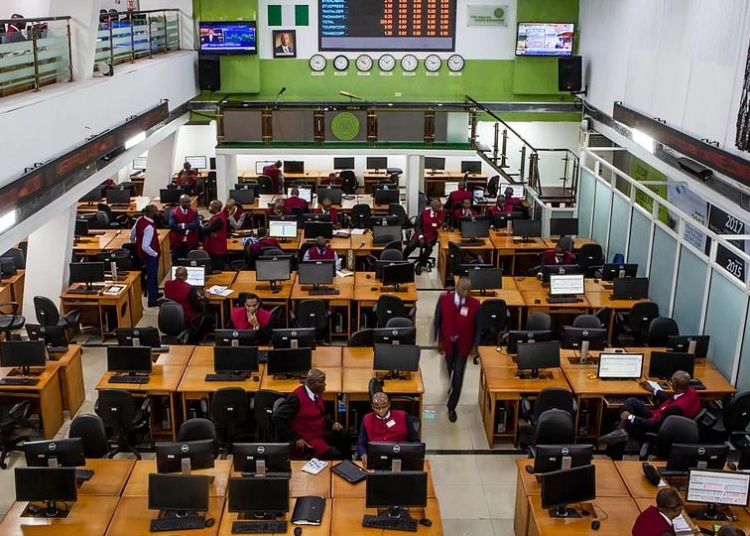
The Nigerian equities market closed last week on a bearish note, extending losses as investors continued profit-taking activities. Market capitalization declined by ₦439 billion, bringing the Nigerian Exchange Limited (NGX) market value to ₦88.77 trillion as of August 29, 2025.
The benchmark All-Share Index (ASI) shed 0.50% week-on-week, settling at 140,295.50 basis points. Consequently, the Month-to-Date (MtD) and Year-to-Date (YtD) returns moderated to +0.3% and +36.3%, respectively.
Sectoral Performance
The downtrend cut across key indices:
- NGX Banking Index: -1.2%
- NGX Insurance Index: -1.0%
- NGX Consumer Goods Index: -0.9%
- NGX Industrial Goods Index: -0.4%
- NGX Oil & Gas Index: -0.2%
This broad decline reflected the prevailing negative sentiment at the close of August trading.
Market Breadth
Investor confidence weakened further, with 57 decliners outweighing 31 gainers.
- Top gainers: McNichols (+18.75% to ₦3.80), NEM Insurance (+17.29% to ₦31.20), Berger Paints (+15.31% to ₦36.90).
- Top losers: Secure Electronic Technology (-22.73% to ₦0.85), Guinea Insurance (-19.77% to ₦1.42), Lasaco Assurance (-13.29% to ₦3.00).
Trading Activity
A total of 3.20 billion shares worth ₦85.40 billion were exchanged in 142,477 deals, lower than the previous week’s 4.77 billion shares valued at ₦107.43 billion across 152,965 deals.
Market Outlook
Looking ahead, analysts expect a cautious but potentially stabilizing market:
- United Capital Plc: The market could see cautious optimism on expectations of a possible interest rate cut by the Central Bank of Nigeria, supported by moderating inflation, a relatively stable naira, and rising foreign reserves.
- Cowry Asset Management Ltd: Performance is expected to remain mixed as tight liquidity and macroeconomic pressures persist. Banking and Industrial Goods may face further sell pressure, though bargain-hunting in oversold Consumer Goods and Insurance stocks could trigger mild rebounds.
- Cordros Research: In the near term, the lack of strong catalysts is likely to keep trading sentiment subdued, with investors focusing on fundamentally solid stocks. Over the medium term, macroeconomic factors—growth, inflation, policy direction, and fixed-income yields—will shape asset allocation decisions between equities and debt instruments.