




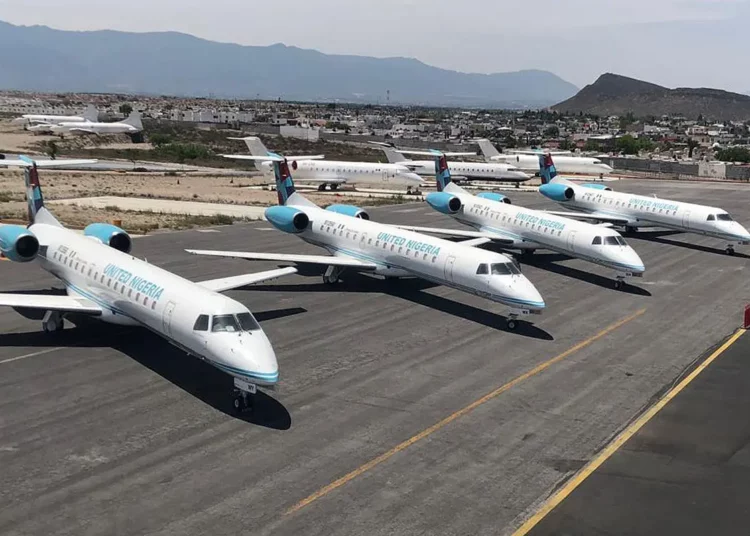
Insurance costs for Nigerian airlines remain disproportionately high, with operators paying up to eight times more than their foreign counterparts to insure aircraft, findings by LEADERSHIP have revealed.
According to industry players, the cost of insuring one aircraft in Nigeria is equivalent to the premium required for eight planes abroad, a burden that continues to erode operators’ profit margins and discourage investment.
Calls for Reform
Dr. Alex Onyema, Vice President of the Airline Operators of Nigeria (AON) and Chairman of Air Peace, attributed the problem to Nigeria’s negative international perception.
“Our country is unfairly stigmatised, and it is affecting aviation too,” Onyema said. “They tell you Nigeria is unsafe, which is untrue. Every country has its share of challenges, but ours is exaggerated. What we pay to insure one aircraft is what insures eight planes elsewhere. If the premiums are reviewed downward, it will improve the airlines’ bottom line.”
Industry Concerns
Aviation experts argue that persistent lapses in airport security and incident management are driving premiums higher. They pointed to the handling of recent Ibom Air and ValueJet incidents in Lagos and Abuja as reinforcing Nigeria’s “high-risk” label among international aircraft lessors and insurers.
Former Med-View Airline executive director, Isiaq NaAllah, warned that failure to address these issues would worsen the industry’s credibility problems.
“The systemic lapses undermine aviation credibility. If we don’t act decisively, we risk deeper profiling by lessors and insurers. Insurers price based on risk, and where enforcement is weak, the economic and reputational costs are inevitable,” NaAllah cautioned.
Additional Risk Factors
Former Associated Airline chief pilot, Capt. Badamasi, highlighted that many Nigerian carriers operate aged aircraft, making maintenance more challenging. With spare parts often imported and difficult to access, insurers assume operators cut corners, thereby raising premiums.
“Safe flights depend on proper maintenance manpower, hangars, and readily available parts. While the first two are in place, the lack of parts fuels insurers’ concerns,” Badamasi explained. He also noted that poor financial health among some airlines, coupled with substandard airport infrastructure such as faulty lighting and runways, further inflates premiums.
Security and Policy Gaps
Adding to the concerns, aviation security lapses have raised red flags. Group Capt. John Ojikutu (rtd), former General Secretary of the Aviation Round Table (ART), said persistent insecurity within airports and on flights inevitably drives insurance costs higher.
“Insecurity in our aviation system whether at the airports or in-flight translates directly into higher premiums,” he noted, stressing that both domestic and foreign airlines could face similar cost pressures if issues remain unresolved.
Outlook
With operators struggling under steep insurance costs, stakeholders are urging urgent government intervention, stronger regulatory enforcement, and investment in aviation infrastructure to restore confidence. Without such reforms, experts warn, Nigeria’s aviation sector risks continued financial strain, reputational damage, and reduced competitiveness on the global stage.