




The World Health Organization (WHO) has called on Nigeria to turn recent health financing reforms into concrete action, warning that bold declarations will amount to little without sustained implementation and accountability.
Speaking at the National Health Financing Policy Dialogue in Abuja on Thursday, WHO Regional Director for Africa, Dr. Mohamed Janabi, commended Nigeria’s initiatives—including the Basic Health Care Provision Fund (BHCPF), the National Health Insurance Authority Act, and the expansion of state health insurance schemes—but stressed that more must be done.
“These reforms are visionary foundations,” he said. “But Nigeria must go further—raise public health spending to at least 20 per cent of the national budget, reduce out-of-pocket payments that trap families in poverty, and strengthen pooling and prepayment mechanisms.”
Janabi underscored the importance of evidence-based policy and accountability, adding that sustainable domestic financing should complement, not replace, donor support. Quoting writer Chinua Achebe, he suggested that Nigeria’s challenge has often been leadership. “Today in this room we are witnessing the opposite. I only wish Achebe was here to see this moment where leadership rises to meet the challenge,” he said.
Accountability Beyond Institutions
WHO Health Economist Francis Ukwuije urged policymakers to extend accountability to individuals and communities. He argued that while civil society organizations (CSOs) have effectively used community scorecards to monitor equity and quality of services, Nigeria must also hold citizens responsible for personal health behaviors.
“Communities and governments cannot carry this alone,” he said, recommending that scorecards be integrated into the BHCPF and state health insurance systems, while drawing funding from mechanisms such as the Vulnerable Group Fund and the HIV Trust Fund.
Donor Support and Sustainability
Maria Kirova, Head of Department at the Global Fund, praised Nigeria’s progress in tackling HIV, tuberculosis, and malaria, citing investments that expanded health insurance in five states, improved oxygen infrastructure, and strengthened supply chains. She stressed, however, that sustaining these gains requires stronger domestic resource mobilization, backed by partnerships across government, civil society, and the private sector.
Strengthening Civil Society
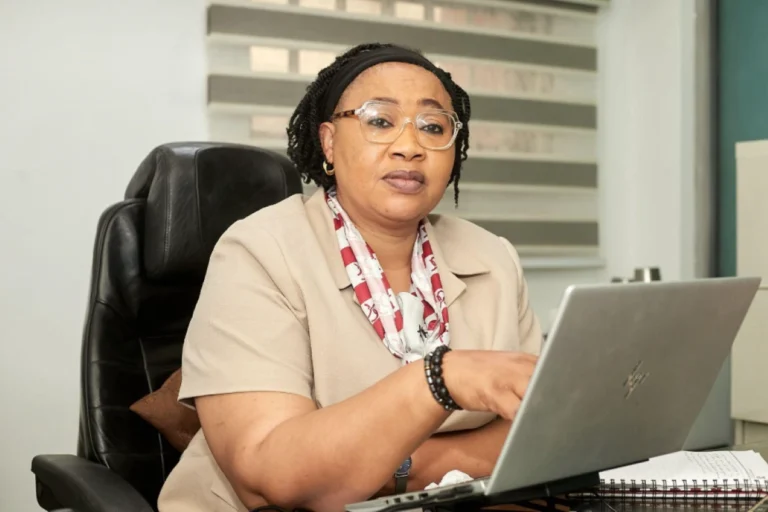
The Director-General of the National Agency for the Control of AIDS (NACA), Dr. Temitope Ilori, challenged CSOs to diversify their funding to preserve independence. “Whoever pays the piper dictates the tune,” she said. “Civil society must adopt innovative business models and remain credible watchdogs in governance.”
Ilori suggested social enterprise approaches, such as consultancy and training services, while also calling for policies that institutionalise civil society’s role in governance.
CSO Commitments
Responding on behalf of civil society, Moji Makanjuola, Founder of the International Society of Media in Public Health (ISMPH), pledged to scale up community-led monitoring, produce multilingual public reports, promote participatory budgeting, and harmonize CSO advocacy efforts. She emphasized the need to include traditional leaders, women, and youth in financing debates while telling human-centered stories that reflect citizens’ realities.
The policy dialogue brought together government officials, development partners, academics, and civil society to chart a path toward sustainable health financing. The consensus: Nigeria’s reforms hold promise, but only action, accountability, and community participation will determine whether they deliver universal health coverage.