




In 2025, Nigeria’s pastoralist sector stood at a critical juncture, caught between deepening crisis and the promise of long-overdue reform. Once defined by mobility, resilience and a central role in food production, pastoralism is now under mounting pressure from insecurity, climate change, shrinking land access and shifting government policy. For millions of Nigerians who depend on livestock for their livelihoods, these challenges have moved beyond policy debates to become matters of daily survival.
Livestock production remains a cornerstone of Nigeria’s food system. Cattle, sheep and goats supply meat, milk, hides and skins to markets nationwide, while serving as income, savings and social security for millions of households. Yet in 2025, pastoralists faced what experts describe as a triple burden of violent conflict, environmental stress and economic exclusion.
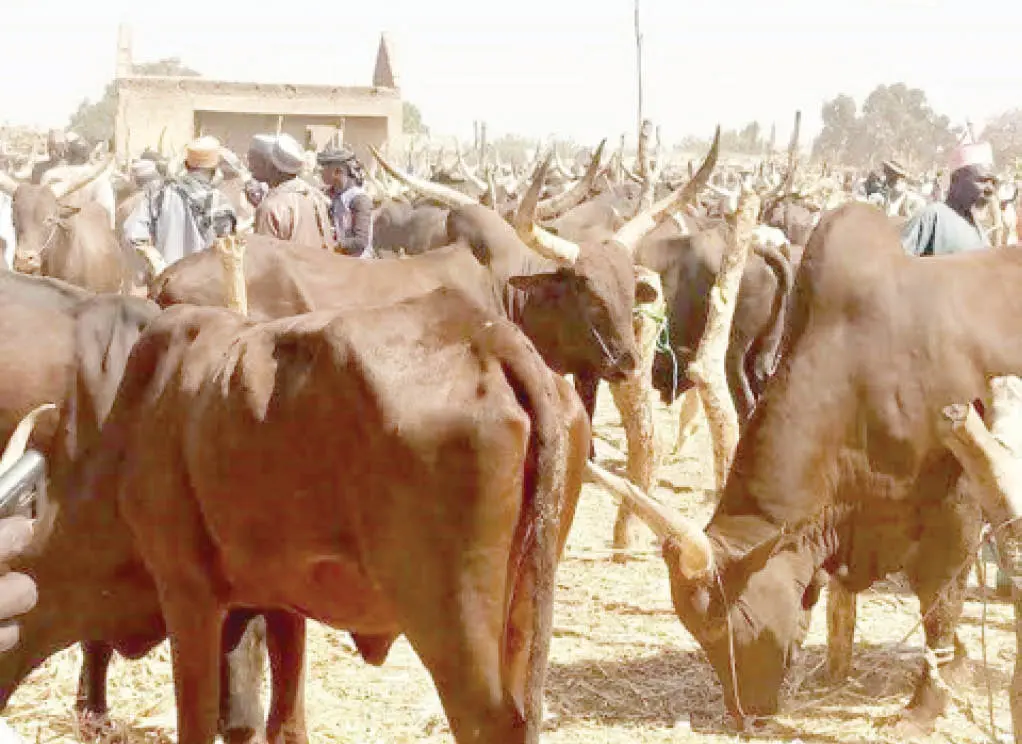
Insecurity remains the most visible and immediate threat. Farmer–herder clashes continued across the Middle Belt and parts of the North West, particularly during the dry season when grazing land becomes scarce and herds move closer to farming communities. These conflicts have grown more complex and deadly, often involving armed groups, criminal networks and cycles of reprisal. Entire communities have been displaced, livelihoods destroyed and trust eroded. For many pastoralists, mobility—once a key strength—has increasingly become a source of danger.
Climate change has intensified these pressures. Erratic rainfall, prolonged dry spells and advancing desertification have reduced pasture and water availability, especially in northern Nigeria. Traditional grazing routes that once supported seasonal migration are disappearing under the pressure of urban expansion, farming, mining and infrastructure development. As herders are forced to travel farther in search of resources, they face higher risks of conflict, disease outbreaks and livestock losses. By 2025, climate stress was no longer a future threat but a defining feature of pastoral life.
Economically, pastoralists remain among Nigeria’s most marginalised groups. Despite managing livestock assets worth trillions of naira, many lack access to credit, insurance, veterinary services and structured markets. Productivity is particularly low in the dairy sector, leaving Nigeria heavily dependent on imports despite having one of Africa’s largest cattle populations. Losses from disease, cattle rustling and climate shocks continue to push many households deeper into poverty.
Against this backdrop, 2025 also marked a shift in policy direction. The federal government took more decisive steps toward modernising the livestock sector, moving away from an unregulated open grazing system toward structured alternatives. The creation of a dedicated Ministry of Livestock Development and renewed focus on grazing reserves, ranching and value-chain integration signalled growing recognition that the status quo is unsustainable.
Rather than an outright ban on open grazing, federal policy has emphasised gradual transition. While several states have enacted anti–open grazing laws, national authorities have acknowledged Nigeria’s diversity and the need for negotiated change. Pilot grazing reserves and ranching schemes introduced in 2025 aim to combine pasture development with water supply, education, healthcare and energy infrastructure. The objective is not only to reduce conflict but also to improve productivity and living standards in pastoral communities.
Another significant development has been the increasing focus on data and risk management. Calls for a comprehensive national livestock census gained momentum in 2025, highlighting the absence of reliable data on herd sizes, movement patterns and disease prevalence. Without such information, effective planning remains difficult. At the same time, pilot index-based livestock insurance schemes have begun to emerge, offering protection against drought and climate-related losses. Though limited in scale, these initiatives suggest a shift toward treating pastoralism as an economic enterprise rather than solely a humanitarian concern.
Looking ahead to 2026, several trends are expected to shape the sector. Livestock reform is likely to deepen, though unevenly. Ranching and grazing reserve rehabilitation may expand in states willing to commit land and political capital. Where reforms are inclusive and well-managed, they could help stabilise livelihoods and reduce conflict. However, poorly implemented or exclusionary policies risk fuelling further tensions.
Insecurity is also expected to remain a defining challenge. The transition period is likely to be volatile, with banditry, cattle rustling and communal violence continuing in areas of weak state presence. Without parallel investments in security, justice and local conflict-resolution mechanisms, livestock reforms alone may fall short of delivering peace.
Climate resilience is set to move to the centre of pastoral policy. As weather shocks intensify, the need for drought-resistant pasture, water infrastructure, early-warning systems and insurance will become unavoidable. Pastoralists without access to these tools risk being pushed out of livestock production entirely, with serious implications for food security.
There is, however, cautious optimism around economic integration. Efforts to link pastoralists to dairy processors, meat markets and financial services could begin to transform the sector. Improved breeds, veterinary care and feed systems have the potential to boost productivity, reduce imports and create jobs along the value chain.
Finally, policymakers are increasingly recognising that pastoral mobility itself is not inherently problematic. Across West Africa, well-managed mobility is viewed as an asset for food security and regional trade. Nigeria’s challenge in 2026 will be to regulate and support movement through negotiation and planning rather than criminalisation.
In 2025, Nigerian pastoralists were caught between crisis and reform. Open grazing under conditions of population growth, climate change and weak governance has become increasingly untenable. Yet reform that is rushed or exclusionary risks deepening marginalisation and conflict. The year 2026 will be pivotal, testing whether Nigeria can transform pastoralism into a modern, productive and peaceful sector or allow unresolved tensions to continue undermining national security and food systems.
The future of pastoralism extends beyond herders alone. It is a national question touching on land use, food security, climate adaptation and social cohesion—one whose outcome will shape Nigeria’s stability for decades to come.