




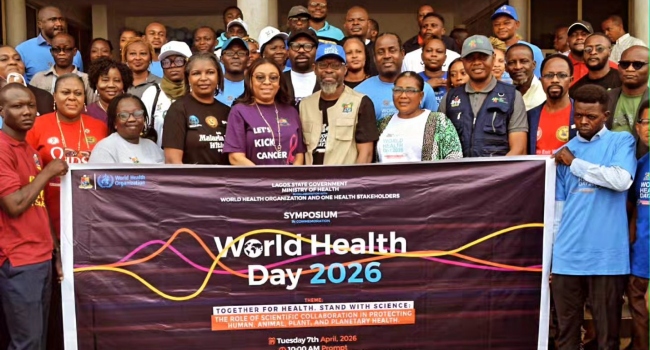
The Lagos State Government has intensified efforts to overhaul its healthcare system through science-driven policies, calling for stronger collaboration between public and private stakeholders to improve health outcomes and rebuild public trust.
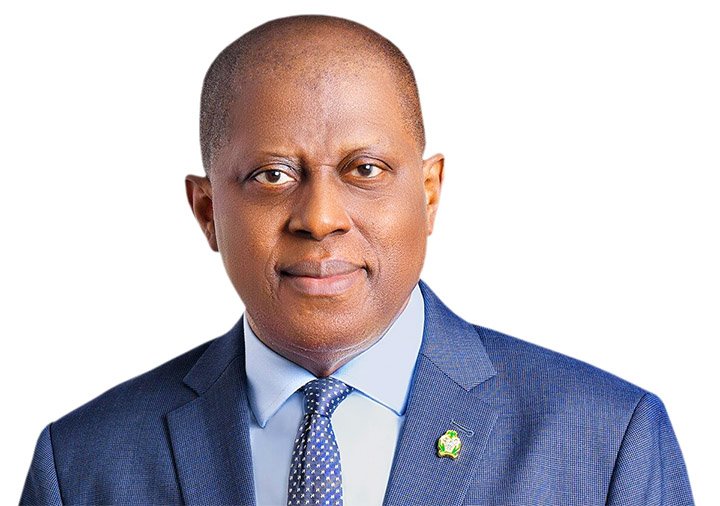
Speaking at the 2026 World Health Day symposium held in Alausa, Ikeja, the State Commissioner for Health, Akin Abayomi, emphasized the critical role of scientific innovation in shaping healthcare delivery across the state.
Abayomi highlighted the mandatory health insurance policy introduced under an executive order signed by Governor Babajide Sanwo-Olu in 2024. The directive requires all residents to enroll in the state’s health insurance scheme, Ilera Eko, with the goal of reducing out-of-pocket medical expenses and expanding access to care.
A key example of science-driven impact, he noted, is malaria control. The adoption of rapid diagnostic testing has significantly reduced malaria positivity rates in public health facilities—from about 60 percent to just five percent—demonstrating that a large proportion of fever cases are not malaria-related and enabling more accurate treatment.
The state is also expanding investments in research, innovation, and digital health systems. According to the Commissioner, smart health information platforms are being deployed to enhance data management, improve patient care, and support evidence-based decision-making.
In addition, Lagos is strengthening healthcare infrastructure through the development of specialist hospitals, modern primary healthcare centres, and research institutions aimed at supporting advanced medical practice and scientific progress.
Abayomi stated that these initiatives are positioning Lagos as a leading hub for medical innovation while reducing dependence on external healthcare systems and improving overall health security.
On broader reforms, he disclosed that the state is increasing healthcare spending to nearly 15 percent of its budget, in line with the Abuja Declaration, while also deepening public-private partnerships and expanding insurance coverage.
Major infrastructure projects underway include the Massey Children’s Hospital, a new general hospital in Ojo, and a 1,000-bed mental health institute, alongside upgrades to primary healthcare centres using climate-smart designs.
Earlier, Special Adviser to the Governor on Health, Kemi Ogunyemi, underscored the importance of cross-sector collaboration in tackling pressing health challenges such as malaria, HIV, and malnutrition, stressing that coordinated policy action is essential.
Permanent Secretary, Dayo Lajide, noted that the symposium was anchored on the One Health approach, which recognizes the interconnectedness of human, animal, and environmental health.
Also speaking, the World Health Organization State Coordinator, Chinenye Okafor, called for increased domestic investment in scientific research and stronger global collaboration to support African-led innovations.
Stakeholders across government agencies, international organisations, and the private sector emphasized the need for data-driven decision-making, improved disease surveillance, and integrated health systems.
Participants unanimously agreed that sustained investment in science, stronger collaboration, and proactive efforts to combat misinformation are essential to building a resilient and future-ready healthcare system.
The symposium concluded with a renewed commitment to advancing the One Health approach and ensuring that scientific evidence remains central to policymaking and healthcare delivery in Lagos.