



Nigeria faces a staggering financing requirement of between ₦157 trillion and ₦236 trillion over the next decade to achieve universal health coverage (UHC), according to Professor Chima Onoka, a health policy and systems expert with the National Health Insurance Authority (NHIA).
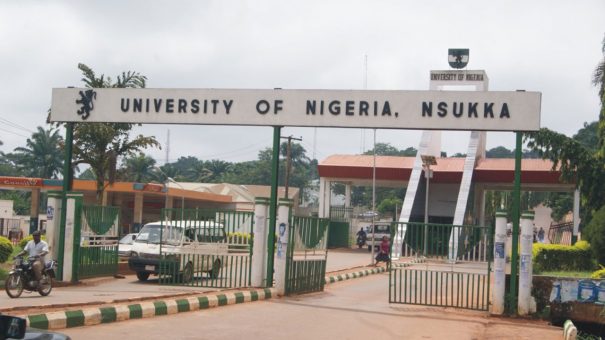
Speaking at the 241st inaugural lecture of the University of Nigeria Nsukka (UNN), Onoka emphasized that the country’s healthcare challenges stem less from technical limitations and more from systemic governance failures. The lecture, titled “Bridging the Divide: The Pracademics Mandate and the Quest for Universal Health Coverage,” highlighted deep structural gaps in Nigeria’s health system.
Onoka noted that despite decades of robust research and data capable of improving healthcare delivery, Nigeria continues to struggle with translating evidence into actionable policy. Using the metaphor of an hourglass, he described a disconnect between extensive academic research and the healthcare realities faced by over 200 million Nigerians.
“At the top, we have a wealth of research and economic theories; at the bottom are millions still waiting for health security. The challenge lies in the narrow pathway that connects evidence to policy and impact,” he said.
He argued that political considerations, institutional bottlenecks, and entrenched bureaucratic practices often determine whether research findings influence policy decisions. According to him, universal health coverage is fundamentally a governance issue rather than a purely medical or financial one.
“Universal health coverage is not a medical problem or a mathematical one—it is a power problem,” Onoka stated, warning that without political will, research risks becoming an “expensive exercise” with little real-world impact.
The professor also expressed concern over Nigeria’s heavy reliance on out-of-pocket healthcare spending, which accounts for approximately 72 percent of total health expenditure—significantly higher than levels observed in countries such as Rwanda, Kenya, and Ghana. He added that government health spending per capita in Nigeria remains far below the global average.
Describing the current system as structurally flawed, Onoka called for a comprehensive redesign rooted in sustainable financing rather than incremental fixes. He, however, identified the Basic Healthcare Provision Fund (BHCPF) as a critical tool for expanding access, describing it as one of the most effective social protection mechanisms in the sector.
Reflecting on his early medical career, Onoka recounted providing emergency care in a rural hospital under the light of a kerosene lamp—an experience he said exposed the stark gap between medical training and real-world healthcare conditions in Nigeria.
“Treating one patient at a time is noble, but it cannot heal a nation,” he remarked.
He also criticized existing health training models, arguing that they often prepare professionals for practice abroad rather than addressing local healthcare challenges. According to him, curricula overly focused on advanced technologies risk producing graduates disconnected from Nigeria’s realities.
Onoka further warned that a weak healthcare system ultimately affects all citizens, regardless of socioeconomic status, stressing that equitable healthcare access is a critical measure of national development.
“A health system that works for the poor is the ultimate test of a nation’s conscience,” he said.
He concluded by advocating for the rise of “pracademics”—professionals who combine academic rigor with practical policy and implementation experience. He urged universities to play a more active role in shaping public policy and ensuring that research translates into measurable societal impact.
According to Onoka, bridging the gap between academia and policymaking is essential for achieving meaningful healthcare reform and expanding access to quality healthcare across Nigeria.