




Kano State is emerging as one of Nigeria’s leading examples of state-led health insurance expansion, with significant growth in enrolment, innovative financing models and operational reforms positioning the state as a potential blueprint for achieving universal health coverage (UHC).
Data from the Kano State Contributory Healthcare Management Agency (KSCHMA) show that total health insurance enrolment rose from 497,262 beneficiaries in June 2023 to 1,187,119 by May 2026—a 139% increase that brought more than one million residents under health insurance coverage within three years.
The expansion reflects a broader effort by the agency to improve financial protection against healthcare costs, particularly for low-income and vulnerable populations that have historically struggled to access formal health financing.
Expanding access for vulnerable groups
The most notable gains were recorded under programmes targeting underserved communities.
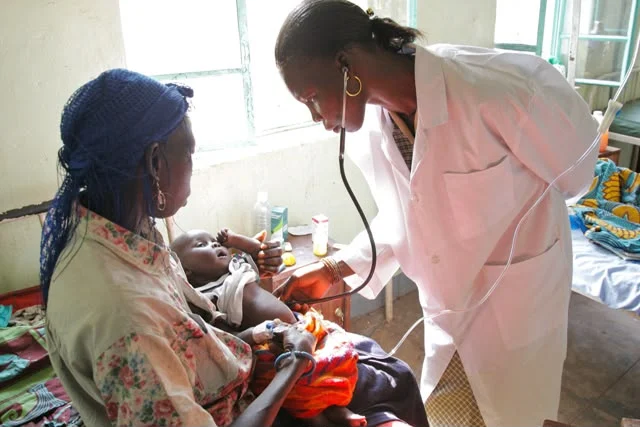
Beneficiaries enrolled through the Basic Health Care Provision Fund (BHCPF) increased from 108,664 to 580,484 during the period, while the state-funded Vulnerable Healthcare Programme expanded from 4,903 to 47,325 beneficiaries.
The schemes provide coverage for groups including pregnant women, children under five, persons with disabilities, sickle cell patients, widows, orphans, retirees with limited income and correctional facility inmates.
Health policy observers say the expansion demonstrates how targeted public financing can improve access to essential healthcare while reducing the financial burden associated with out-of-pocket medical expenses.
Community-based enrolment drives growth
A key feature of Kano’s approach has been the decentralisation of enrolment services.
Rather than relying solely on a central office, KSCHMA established registration points across the state’s 44 local government areas, complemented by community registration centres and a self-service digital portal.
The strategy has reduced logistical barriers for residents and improved awareness of health insurance at the grassroots level, contributing to the sharp increase in enrolment.
Innovative financing and rapid response initiatives
Kano has also introduced new financing mechanisms aimed at expanding coverage beyond conventional government funding.
Among the initiatives is a Zakat and Waqf-supported ethical health financing model that enables faith-based organisations and philanthropists to sponsor health insurance premiums for indigent residents, including orphans, Almajiri children and pregnant women.
Industry analysts say the programme demonstrates how domestic charitable giving can complement public health financing when supported by transparent institutional frameworks.
The agency has also established what it describes as Nigeria’s first State Social Health Insurance Agency Rapid Response Team, designed to facilitate emergency enrolment, connect vulnerable individuals with healthcare facilities and coordinate welfare referrals for those identified through community reports or distress calls.
In addition, Kano has extended health insurance coverage to inmates in correctional facilities, reinforcing efforts to broaden access to healthcare for traditionally underserved populations.
Strengthening operational efficiency
Beyond enrolment growth, KSCHMA has implemented a series of administrative reforms aimed at improving service delivery and financial sustainability.
The agency reported disbursing ₦2.9 billion in capitation payments to primary healthcare providers in 2025 while removing 8,875 ghost enrollees through data audits, generating estimated savings of ₦42.6 million.
Claims processing time has also been reduced from approximately 30 days to six days following the introduction of digital authorisation systems designed to improve efficiency without delaying patient care.
Quality assurance measures included 968 supervisory visits to accredited healthcare facilities, expanded complaint resolution mechanisms and increased monitoring of service utilisation.
According to agency figures, 605,582 insured residents accessed healthcare services during 2025, representing a utilisation rate of 56%, indicating that enrolment growth has translated into increased use of healthcare services.
Digital transformation supports expansion
Technology has played an increasingly important role in Kano’s health insurance reforms.
The agency has deployed a digital primary healthcare utilisation platform, introduced electronic medical records in high-volume hospitals, trained more than 1,000 healthcare workers, upgraded its customer contact systems and strengthened digital financial management processes.
Officials say these investments have improved data quality, enhanced accountability and supported the agency’s ability to scale operations while maintaining oversight.
Leadership and lessons for other states
The reforms have been implemented under the leadership of KSCHMA Executive Secretary, Dr. Rahila Aliyu Muktar, whose administration has focused on expanding coverage, improving provider payments, strengthening fraud detection and leveraging technology to improve operational performance.
Health sector stakeholders say Kano’s experience illustrates how sustained political commitment, community engagement, administrative reforms and innovative financing can accelerate progress toward universal health coverage.
As Nigeria continues efforts to reduce reliance on out-of-pocket healthcare spending, Kano’s model is increasingly being viewed as a practical example of how state governments can expand health insurance coverage through coordinated policy implementation, stronger institutional capacity and targeted support for vulnerable populations.