

For millions of Nigerians paying for health insurance, the expectation is simple: when sickness comes, the insurance card should protect them from the financial shock of hospital bills.
But for thousands of enrollees, the reality can be far more frustrating.
A patient arrives at a hospital with a valid health insurance plan, only to discover that the prescribed drug is excluded. Another is asked to pay for a test he believed was covered. A third is left waiting while the hospital seeks an authorisation code from his Health Maintenance Organisation, HMO.
Then the arguments begin.
The hospital blames the HMO. The HMO points to the patient’s benefit package. The patient, who may be in pain or facing an emergency, is left wondering who is actually responsible.
And official figures show this is not just a collection of isolated complaints.
The National Health Insurance Authority, NHIA, recorded 3,507 complaints in 2024, according to its complaints report released in 2025. Healthcare facilities accounted for 2,273 complaints, while HMOs attracted 1,232.
The regulator resolved 2,929 complaints, representing 84 per cent of the total.
The complaints against hospitals included alleged denial of services, unavailable medicines, demands for out-of-pocket payments for covered services and failure to explain payments.
Complaints against HMOs included delays or denial of referral authorisation codes, delays in settling reconciled payments and inadequate monitoring of healthcare providers.
The regulator subsequently took enforcement action.
Four healthcare facilities were suspended and six delisted after investigations, while 35 HMOs received warning letters and corrective-action directives.
The NHIA also ordered refunds.
In all, 54 enrollees received N4.38 million from 39 healthcare facilities, while 12 HMOs were directed to refund N748,200 to 15 enrollees.
Those numbers expose an uncomfortable problem in Nigeria’s expanding health insurance market: having insurance does not necessarily mean having frictionless access to healthcare.
When the insurance card meets the hospital bill
The problem starts with a basic misunderstanding.
Many enrollees assume that once a hospital accepts their HMO, virtually every treatment provided there is automatically covered.
It isn’t.
Health insurance operates according to benefit packages, contracts, exclusions, tariffs and authorisation procedures.
An HMO may have an agreement with a hospital covering specific services at agreed rates. Some procedures may require prior approval. Certain drugs, investigations, specialist services or procedures may be excluded from a particular plan.
That distinction may make perfect contractual sense.
But to a sick patient sitting in a hospital, it can sound like an excuse.
“I have insurance.”
“Your plan doesn’t cover it.”
That exchange can quickly turn a promise of financial protection into an unexpected demand for cash.
The immediate past National President of the Healthcare Providers Association of Nigeria, Dr Adeyeye Jimmy Arigbabuwo, said disagreements are inevitable in a system involving multiple stakeholders, particularly where contractual terms are poorly understood or poorly implemented.
He said service-level agreements between HMOs and healthcare providers typically spell out benefit packages, capitation, fee-for-service arrangements, payment terms, claims procedures and dispute-resolution mechanisms.
The problem, he said, arises when parties fail to comply with the agreed terms.
He also pointed to exclusions and exemptions that many enrollees may not fully understand.
That knowledge gap can be expensive.
The authorisation problem
One of the most frustrating issues for patients is the authorisation process.
From the HMO’s perspective, authorisation helps confirm that a proposed service falls within an enrollee’s entitlement and prevents inappropriate or unverifiable claims.
From the patient’s perspective, however, authorisation can look like a bureaucratic obstacle between them and treatment.
The NHIA recognised the problem in 2025 when it directed HMOs to issue referral authorisation codes within one hour of a request.
Healthcare facilities were also instructed to proceed with treatment in emergency situations while awaiting authorisation, subject to applicable protocols.
The directive followed complaints over delays in obtaining approvals.
That distinction matters because a hospital cannot simply ignore its contractual relationship with an HMO either.
If it provides a costly procedure without the required approval and later discovers that the HMO will not reimburse it, the financial burden can shift back to the provider.
And that brings the industry to its most uncomfortable question:
Who pays?
Hospitals need money. HMOs need controls. Patients need care.
A hospital has salaries to pay, medicines to purchase, equipment to maintain and electricity bills to settle.
An HMO, meanwhile, has a responsibility to manage healthcare financing within the premiums or contributions available to it and the contracts it has signed with providers.
It cannot simply approve every claim presented by a hospital without verification.
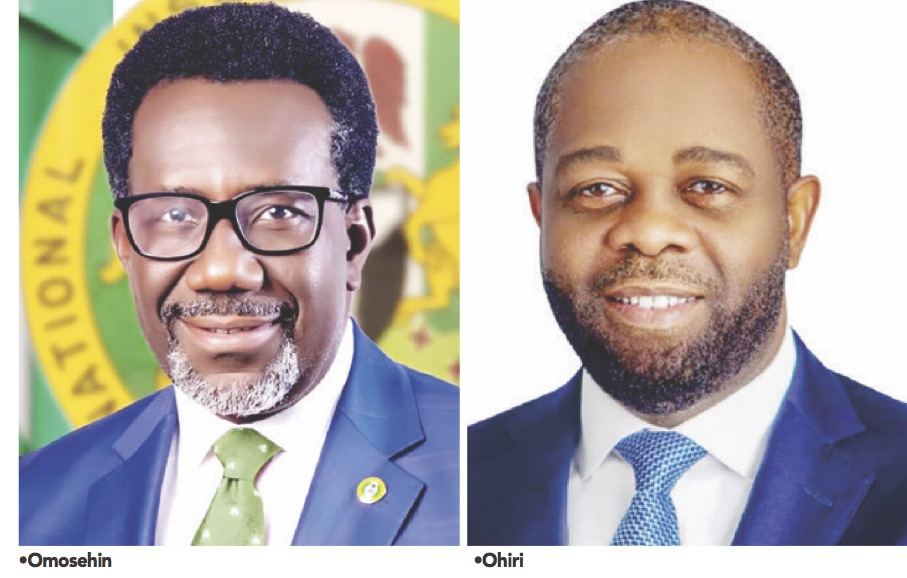
NHIA Director-General, Dr Kelechi Ohiri, has emphasised that the authority expects validated claims to be honoured.
The word “validated” is crucial.
Claims must be assessed against the services delivered, the patient’s entitlement and the contractual terms agreed between the HMO and healthcare provider.
But while verification protects the insurance pool against waste and abuse, prolonged disputes over claims can hurt hospitals’ cash flow.
That pressure becomes even more significant as Nigerian healthcare providers confront rising costs of medicines, equipment, electricity, wages and other operational expenses.
The tariff war nobody wants to talk about
The cost of providing healthcare has become another fault line.
If a hospital believes that the tariff agreed with an HMO no longer covers the cost of delivering a service, tension is almost inevitable.
The HMO, however, must manage its obligations within available insurance funding.
When medical costs rise faster than insurance payments, hospitals complain about sustainability while HMOs face pressure to control expenditure.
The regulator has already moved to address part of this problem.
In February 2025, the NHIA announced a 93 per cent increase in capitation compared with December 2023 rates and a 378 per cent increase in fee-for-service payments.
The authority said the revised rates followed an actuarial review and were intended to address outdated payments and rising medical costs.
That adjustment is important because an insurance system cannot remain viable if healthcare providers cannot afford to deliver the services they have contracted to provide.
But the NHIA complaints figures also make another point clear.
HMOs are not the only problem.
Healthcare facilities attracted substantially more complaints than HMOs in 2024.
That means the popular narrative of patients versus HMOs is incomplete.
Hospitals have obligations too.
They are expected to provide covered services in accordance with agreed terms, follow procedures and avoid charging enrollees for services that their plans cover.
HMOs must provide timely authorisation, process legitimate claims and monitor providers.
Patients also have a responsibility to understand their policies, use approved facilities and ask questions about exclusions and co-payments.
And the regulator has to make sure the rules are enforced fairly.
Nigeria’s health insurance boom faces its real test
The stakes are getting higher because Nigeria is expanding health insurance coverage.
The NHIA reported in July 2026 that enrolment had reached 22.03 million Nigerians, representing 35 per cent year-on-year growth.
The authority attributed the growth to increased collaboration with state health insurance agencies, government institutions, organised labour, employers and the private sector, alongside implementation of mandatory health insurance provisions.
The Federal Government has even set a much larger target.
Coordinating Minister of Health and Social Welfare, Prof Muhammad Ali Pate, said in February 2026 that the government was targeting about 50 million Nigerians for health insurance coverage by 2030.
But here’s the problem:
Nigeria can put millions more people on insurance registers without necessarily giving them meaningful financial protection.
A bigger enrolment number is impressive.
A patient who walks into a hospital and receives the treatment promised by the policy is more important.
That is where the system will ultimately be judged.
Can the patient understand what the policy covers?
Can the hospital obtain authorisation quickly?
Can the HMO settle a valid claim without unnecessary delay?
Can the patient get emergency treatment without being trapped in an argument over paperwork?
And when something goes wrong, can the patient obtain a refund or other remedy without spending months fighting the system?
These are the questions that matter as Nigeria pushes towards universal health coverage.
The patient remains the weakest link
There is an unavoidable imbalance in this three-way relationship.
The hospital understands healthcare delivery.
The HMO understands insurance contracts and claims management.
The regulator understands the rules.
The patient is often expected to understand all three.
That is hardly realistic, particularly when the patient is sick.
The solution is not to eliminate every disagreement. Disputes are inevitable in a complex insurance market.
The solution is to ensure that disagreements do not become barriers to legitimate healthcare.
Benefit packages need to be clearer.
Exclusions should be communicated before patients need treatment, not at the hospital reception.
Authorisation processes must be fast.
Validated claims should be paid within agreed timelines.
Hospitals that wrongly charge patients must face consequences.
HMOs that unnecessarily delay legitimate care must also face consequences.
And the NHIA must continue to provide a credible avenue for complaints and enforcement.
Its 2024 record suggests that mechanism is already producing results: thousands of complaints were resolved, millions of naira were refunded to affected enrollees, and both healthcare facilities and HMOs faced sanctions.
But enforcement after a patient has suffered is only part of the solution.
The bigger goal should be prevention.
Because the ultimate measure of health insurance is not how many cards are issued, how many policies are sold or how many Nigerians appear on an enrolment database.
It is what happens when the card is presented at the hospital.
For an industry seeking to expand coverage to tens of millions more Nigerians, that moment will determine whether health insurance is genuinely a shield against medical poverty—or simply another piece of plastic that comes with conditions patients discover when they are already sick.