


Lagos State is intensifying its push for compulsory health insurance, warning that families could be driven into financial hardship when faced with the cost of life-saving medical care.
The Lagos State Government has renewed its campaign for mandatory health insurance, saying broader coverage is essential to protecting residents from the devastating financial consequences of serious illness.
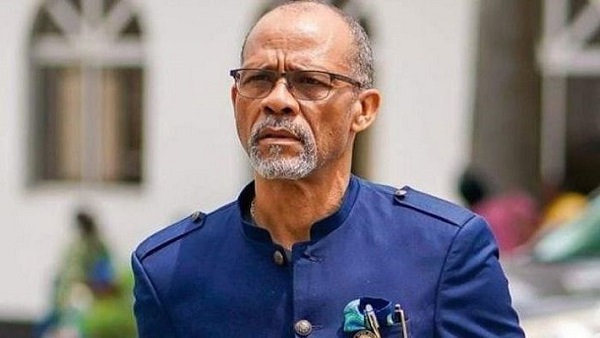
Commissioner for Health, Prof. Akin Abayomi, disclosed the government’s position on Tuesday while receiving beneficiaries of the state’s Free Health Initiative who underwent complex cardiac procedures with government support.
Abayomi said the successful recovery of the beneficiaries demonstrated the importance of establishing a healthcare financing system that allows residents to obtain specialist treatment without being forced to sell property, land or deplete their savings.
“For us as government, in healthcare delivery, there is one side that is the ability to treat, and then there is the other side, which is who pays for it, because there is nothing free,” he said.
The commissioner said an executive order recently issued by the state making health insurance compulsory was intended to tackle the financial barriers that often delay or prevent residents from accessing essential medical treatment.
“Your health is your greatest asset. Insure it,” Abayomi said, explaining that insurance would distribute healthcare costs across the population while shielding individual households from catastrophic medical expenses.
Lagos targets advanced medical care
Beyond expanding health insurance coverage, the state government said it was investing in specialist medical capacity to reduce the need for residents to seek treatment abroad.
Abayomi said Lagos was working to strengthen local expertise and infrastructure for complex cardiac and paediatric procedures, with the aim of reducing dependence on countries such as India, the United Kingdom, the United States and South Africa.
He specifically commended cardiothoracic surgeon Prof. Bode Falase for remaining in Nigeria and contributing to the development of advanced cardiac surgery capacity in Lagos.
“We’re trying to build that capacity on the ground so that when the next patient that comes, we will not be in a position to send you to India,” the commissioner said.
The proposed Massey Children’s Specialist Referral Centre is also expected to form part of the state’s broader strategy to expand access to specialised healthcare.
Patient stories highlight the stakes
The government’s renewed push for compulsory insurance comes against the backdrop of beneficiaries who described the difficult experiences they endured while battling serious illnesses before receiving state-supported treatment.
Among them was 19-year-old Lydia Ogungbayi, who underwent a complex cardiac operation in December 2025 after living with progressive massive anasarca associated with constrictive pericarditis for five years and nine months.
According to the Director of Medical Administration, Training and Programmes in the Lagos State Ministry of Health, Dr. Mazeedat Erinosho, the state contributed ₦5 million towards Ogungbayi’s treatment, while additional resources were mobilised to support the operation.
For the Lagos government, cases such as Ogungbayi’s illustrate the wider challenge facing households when major medical conditions collide with limited financial resources.
By combining compulsory health insurance with investments in specialist care, the state says it hopes to build a system in which residents can access potentially life-saving treatment without having to choose between their health and their financial survival.