




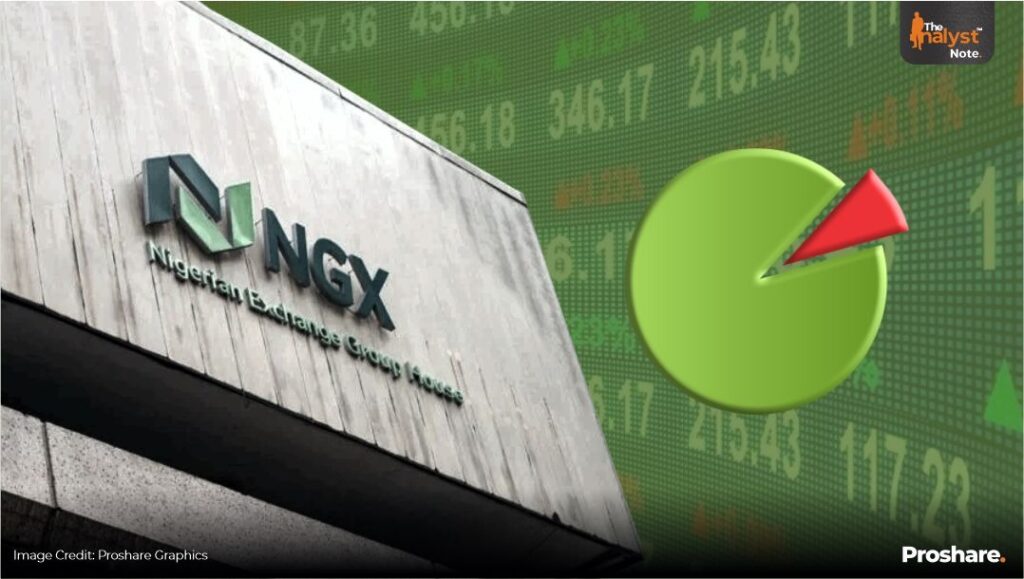
Nigeria’s insurance stocks are facing a bruising reversal in 2026, with the NGX Insurance Index falling 8.65 per cent year-to-date, making it the only major sectoral index on the Nigerian Exchange to remain in negative territory as of August 21.
The decline comes despite the industry’s recently completed recapitalisation exercise, which was widely expected to strengthen insurers’ balance sheets and improve investor confidence.
Instead, the market has taken a more cautious view of the sector, with concerns over potential share dilution, uneven earnings performance and profit-taking weighing heavily on insurance stocks.
The contrast with other sectors is striking. As of August 21, the NGX Banking Index had surged 63.18 per cent, while the Oil & Gas Index gained 85.76 per cent. The Industrial Goods Index climbed 82.84 per cent, the All-Share Index rose 53.81 per cent, while the Consumer Goods Index recorded a more modest 1.62 per cent gain.
For insurance investors, the figures represent a dramatic change in fortunes.
The sector had enjoyed an extraordinary run over the previous two years. In 2024, the NGX Insurance Index jumped 107.74 per cent, ranking second among the exchange’s sectors behind Oil & Gas, which returned 159.81 per cent.
The momentum continued into 2025, when insurance stocks remained among the market’s stronger performers, delivering approximately 79 per cent in returns to shareholders by August.
That rally has now given way to a much more difficult market environment.
Earnings Concerns Add to Investor Pressure
The weakness in insurance stocks has also coincided with mixed financial performances among some major operators.
AXA Mansard Insurance Plc, for example, recorded a 22 per cent increase in revenue to N160.56 billion for the year ended December 31, 2025. However, its profit before tax plunged 81 per cent, falling from N31.69 billion in 2024 to N6.12 billion.
The divergence between revenue growth and profitability has raised questions about the ability of some insurers to convert expanding business volumes into stronger bottom-line returns.
Share-price movements across the sector have similarly reflected the cautious mood.
AXA Mansard, which started 2026 at N13.70 per share, closed at N11.90 on August 21, representing a decline of about 13.1 per cent.
Sunu Assurances Nigeria Plc suffered a steeper fall, dropping approximately 45.5 per cent from N5.50 at the beginning of the year to N3.00.
Cornerstone Insurance Plc was among the biggest casualties, falling about 65 per cent from N5.96 to N2.08 per share.
Coronation Insurance Plc also declined, dropping roughly 36 per cent from N3.25 to N2.08 during the period.
Why Recapitalisation Has Not Triggered a Stock Market Rally
Rather than immediately producing a surge in share prices, the recapitalisation exercise appears to have introduced a fresh layer of uncertainty for investors.
Market operators said concerns about dilution following capital raising have encouraged investors to take a defensive stance. Some shareholders are also locking in gains following the substantial rallies recorded by insurance stocks over the previous two years.
With the recapitalisation process reshaping the competitive landscape, investors are also waiting to see how consolidation within the industry will affect individual companies.
That uncertainty could keep pressure on insurance stocks in the short term, particularly if investors remain unconvinced that higher capital requirements will translate quickly into stronger earnings and shareholder returns.
A Difficult Present, but Potentially Stronger Future
Despite the current sell-off, market participants remain optimistic about the sector’s longer-term prospects.
The recapitalisation has increased the financial capacity of insurers and could position stronger operators to pursue larger underwriting opportunities, invest in technology and compete more aggressively across Nigeria’s largely underpenetrated insurance market.
The challenge for investors is determining which companies will ultimately emerge as the strongest beneficiaries.
For now, the numbers tell a very different story from the one seen during the sector’s remarkable 2024 and 2025 rallies.
With the NGX Insurance Index down 8.65 per cent and several major insurance stocks recording double-digit or even steeper losses, investors appear to be demanding clearer evidence that the industry’s new capital base will deliver sustainable profitability.
The next phase could therefore be crucial. As consolidation takes shape and insurers begin operating with their strengthened capital positions, the market will be watching closely to determine whether the current downturn is a temporary correction—or the beginning of a longer reset for Nigeria’s insurance stocks.