



Millions of Nigerians Still Face Heavy Medical Bills Despite Rising Insurance Enrolment
Nigeria’s health insurance system is facing renewed calls for urgent reform as healthcare providers warn that millions of households remain financially exposed when illness strikes.
Although health insurance enrolment has reportedly increased to about 22 million people, a large proportion of Nigerians still pay directly for medical treatment, leaving families vulnerable to unexpected healthcare expenses.
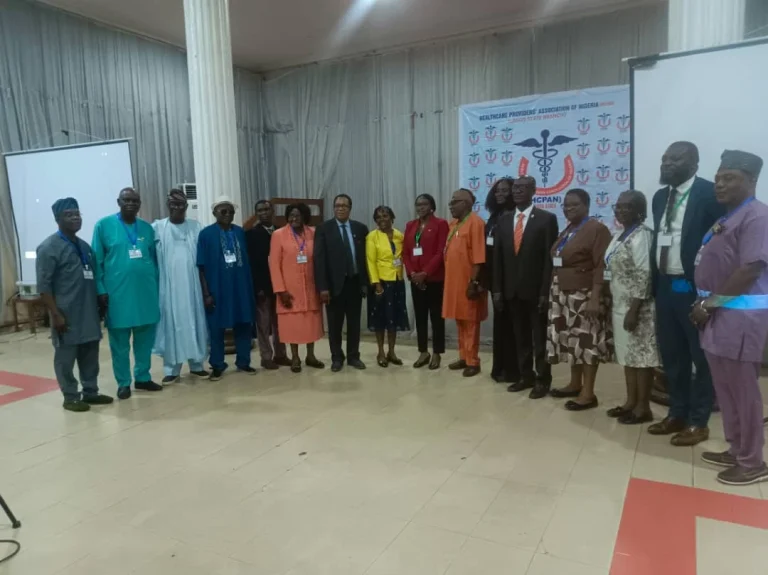
The Healthcare Providers’ Association of Nigeria (HCPAN) has called for changes to make health insurance more affordable, accessible and effective, particularly for people working in the informal sector.
The association made the call during its 2026 Annual Scientific Conference and Annual General Meeting of the Lagos State chapter, held at the Lagos Chamber of Commerce and Industry building in Lagos.
The conference focused on expanding health insurance coverage and improving community-based insurance schemes for informal-sector workers.
The central message was clear: increasing the number of people enrolled in health insurance is not enough if they still struggle to obtain quality treatment when they need it.
Why Health Insurance Enrolment Has Not Solved the Problem
In his keynote address, the Chief Executive Officer of Drugstoc Limited, Dr Chibuzo Opara, represented by the company’s Head of Business, Damilare Ojo, said Nigeria must look beyond enrolment figures when measuring the effectiveness of health insurance.
According to the report, health insurance enrolment had reached approximately 22 million people, representing less than 10 per cent of Nigeria’s population.
Opara also cited government figures indicating that out-of-pocket payments account for more than 71 per cent of healthcare spending in Nigeria.
These figures point to a major challenge: many Nigerians still have to finance medical treatment directly rather than relying on pooled insurance contributions.
Out-of-pocket spending can become particularly difficult when patients require emergency treatment, ongoing medication, surgery or care for chronic conditions.
For households with limited savings, a sudden medical bill may mean borrowing money, selling assets, delaying treatment or reducing spending on essential needs.
Health insurance is intended to reduce this financial exposure by pooling contributions and covering eligible healthcare expenses under defined policy or scheme conditions.
However, the protection people receive depends on factors such as the benefits included, participating healthcare providers, exclusions, payment arrangements and the practical accessibility of services.
The Informal Sector Needs a Different Health Insurance Approach
One of the biggest challenges identified by healthcare providers is extending health insurance to people who do not earn regular monthly salaries.
Traders, artisans, transport workers and small business owners often experience fluctuating income. A fixed monthly contribution may therefore be difficult to maintain, particularly during periods of low business activity.
HCPAN called for more flexible contribution arrangements, suitable benefits packages and group enrolment through trusted associations.
Such approaches could help bring health insurance closer to people whose working arrangements differ from those of formally employed workers.
For example, market associations, transport unions, artisan groups and other community organisations could potentially help eligible members understand available schemes and participate in group enrolment arrangements.
Flexible payment schedules may also help address the difficulties faced by people whose earnings vary from week to week.
However, flexibility must be supported by sound financing and clear rules. Insurance schemes need sufficient resources to pay for covered healthcare services while ensuring that beneficiaries understand their contributions, benefits and responsibilities.
The challenge is to design arrangements that are affordable to members and financially sustainable for the schemes providing coverage.
Health Insurance Must Cover More Than Hospital Visits
Healthcare providers also stressed the importance of ensuring that insured Nigerians can access quality treatment and prescribed medicines.
Opara argued that the real measure of success is whether beneficiaries can obtain care when they need it without placing their households under severe financial strain.
This highlights an important distinction between having insurance enrolment and receiving meaningful protection.
A person may be enrolled in a scheme but still encounter difficulties if nearby healthcare facilities are unavailable, medicines are inaccessible or particular services are not covered.
To improve the practical value of health insurance, stakeholders need to consider:
- Access to healthcare facilities: Beneficiaries should know which hospitals and clinics participate in their scheme.
- Medicine availability: Prescribed medicines covered by the scheme should be accessible through appropriate channels.
- Clear benefits: Members should understand what treatments and services their coverage includes.
- Reliable service delivery: Healthcare providers need workable systems for delivering care to insured patients.
- Effective complaint resolution: Beneficiaries need clear channels for raising concerns when services fall short of expectations.
Health insurance is more likely to earn public confidence when people can see that their coverage provides practical assistance during illness.
Why HCPAN Wants Community Pharmacies Included
HCPAN also called for community pharmacies to be integrated into health insurance networks.
Community pharmacies can play an important role in making medicines and certain pharmacy services accessible closer to where people live and work.
Where scheme rules and professional regulations permit, integrating suitable pharmacies into insurance networks could make it easier for beneficiaries to obtain covered medicines and support continuity of treatment.
This may be particularly relevant for people managing long-term conditions who need regular access to prescribed medication.
However, successful integration would require clear agreements on covered medicines, reimbursement rates, prescription requirements, record-keeping and quality standards.
Healthcare providers would also need confidence that payments for covered services would be made reliably.
Expanding access is important, but it must be accompanied by appropriate safeguards to ensure patients receive suitable care and schemes remain financially sustainable.
Delayed Reimbursements Could Undermine Healthcare Delivery
Another issue raised by healthcare providers was the need for timely reimbursement.
When hospitals, clinics and other participating providers deliver services to insured patients, they depend on agreed payment arrangements to cover staffing, medicines, equipment and day-to-day operating expenses.
If reimbursements are delayed, providers may experience financial pressure that affects their ability to deliver services efficiently.
This is why HCPAN called for stronger collaboration between regulators, insurers and frontline healthcare professionals.
More efficient claims processing, transparent reimbursement timelines and better communication could help improve working relationships between healthcare providers and insurance schemes.
Reliable reimbursement arrangements may also encourage more facilities and service providers to participate in health insurance networks.
Ultimately, the effectiveness of health insurance depends not only on collecting contributions but also on ensuring that the system can pay for the covered services beneficiaries are entitled to receive.
What These Reforms Could Mean for Nigerians
If the proposed changes are effectively implemented, they could help address some of the barriers preventing informal-sector workers from obtaining health insurance.
More flexible contributions could make participation easier for people with irregular earnings. Group enrolment through trusted associations could help raise awareness and simplify access. Stronger provider networks could also improve access to treatment and prescribed medicines.
For families, effective health insurance may reduce the need to pay the full cost of eligible medical services at the point of care.
However, the extent of that protection depends on the scheme, its benefit limits, participating providers and applicable terms.
Consumers should therefore ask important questions before enrolling:
- What healthcare services and medicines are covered?
- Which hospitals, clinics and pharmacies participate?
- How much must I contribute, and how often can I pay?
- Are there waiting periods, exclusions or benefit limits?
- What happens if I need treatment that is not covered?
- How can I raise a complaint if I cannot access an eligible service?
Understanding these details can help people choose coverage that better matches their healthcare needs and financial circumstances.
Why Collaboration Is Essential to Health Insurance Reform
HCPAN’s recommendations underline the need for coordinated action across Nigeria’s healthcare and insurance sectors.
Regulators can establish appropriate rules and monitor compliance. Insurers and health insurance schemes can develop sustainable coverage arrangements. Healthcare providers can deliver services to beneficiaries, while pharmacies can support access to medicines where included in scheme networks.
Employers, trade associations, community organisations and other trusted groups may also help people understand and access suitable health coverage.
No single stakeholder can resolve every challenge independently. Expanding coverage requires a system in which contributions are manageable, benefits are clearly defined, healthcare services are accessible and providers can rely on agreed reimbursement processes.
Just as importantly, progress should be measured by more than the number of people enrolled. The proportion of healthcare costs paid directly by households, access to covered services, medicine availability and the reliability of provider payments are also important indicators.
Conclusion: Nigeria Needs Health Insurance That Works When People Need It Most
Nigeria’s health insurance system faces a significant challenge: expanding coverage while ensuring that enrolled members can actually access affordable, quality healthcare.
HCPAN’s call for flexible contributions, community-based enrolment, pharmacy integration and timely provider reimbursement highlights practical areas for improvement.
With reported enrolment at approximately 22 million people and out-of-pocket spending still accounting for more than 71 per cent of healthcare expenditure, the figures cited at the conference underline the scale of the challenge.
For health insurance to provide meaningful financial protection, people must be able to afford participation, understand their benefits and access covered care when illness strikes.
The real test of health insurance reform is not simply how many people sign up—it is whether families can obtain the care they need without facing overwhelming medical bills.