The Federal Government of Nigeria has secured a €275 million funding package to scale up the Nigeria Erosion and Watershed Management Project (NEWMAP) and other climate-focused initiatives aimed at land restoration and environmental sustainability nationwide.
Minister of Environment, Balarabe Lawal, announced the funding during a Government–Citizens Engagement forum themed “Assessing Electoral Promises: Fostering Government–Citizen Engagement for National Unity,” organized by the Sir Ahmadu Bello Memorial Foundation in Kaduna.
Lawal stated that €175 million of the fund will directly support the NEWMAP project, while the remaining €100 million will be allocated to related environmental programs.
He also revealed that the Federal Government has concluded plans to launch a National Flood Insurance Policy and expand the National Sovereign Green Bond to ₦250 billion. These initiatives are intended to finance eco-friendly infrastructure and further promote sustainable development.
Strengthening Environmental Protection and Food Security
The Minister highlighted ongoing efforts to bolster environmental conservation and improve food security, especially in Nigeria’s northern region. He announced plans to deploy Forest Rangers across the 19 northern states and the Federal Capital Territory to protect forest reserves and tackle criminal activity.
In the fight against desertification, the government has planted over 5.5 million trees through programs like the National Agency for the Great Green Wall (NAGGW) and the Agro-Climatic Resilience in Semi-Arid Landscapes (ACReSAL). The Forest Research Institute of Nigeria is also preparing 10 million drought-resistant seedlings for 2025.
Reforestation efforts include the cultivation of five million date palm seedlings and 3.85 million neem seedlings for distribution across 11 frontline states. Additionally, 175 kilometers of shelterbelts have been established across seven northern states to slow desert encroachment, while 278,235 hectares of degraded land have been restored.
Promoting Sustainable Alternatives and Green Jobs
To reduce dependence on wood and promote sustainable livelihoods, the government is investing in bamboo development. The Bamboo Factory in Kogi State has created over 20,000 jobs and is helping to build a thriving bamboo and rattan economy.
Furthering its green economy agenda, the Federal Government has assumed management of three national parks—Kampe, Marhai, and Hadejia Wetlands—to boost eco-tourism, biodiversity, and job creation. Plans are also in motion to take over four more parks located in Kano, Plateau, Niger, and Katsina States.
Enhancing Flood and Erosion Response
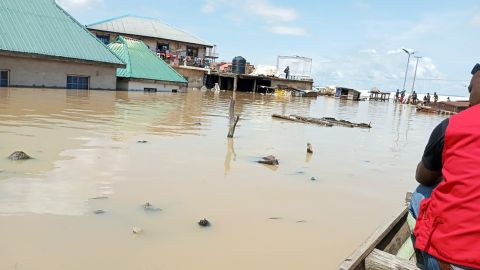
The government has significantly improved its flood and erosion response capabilities. A modern flood alert system now serves 258 communities with 90% accuracy, helping to minimize casualties and property damage.
A total of 198 flood and erosion control projects have been completed nationwide. These include the Jibia River Bank Protection (1,812 hectares), Hadejia River desilting (182,780 hectares), and rehabilitation of the Nguru Wetland (29,622 hectares).
Agricultural Support and Circular Economy Transition
The Minister also detailed the government’s support for agricultural development. A total of ₦12 billion has been distributed to 9,648 beneficiaries across 16 northern states under various agricultural value chain programs. Tractors, fertilizers, and milling machines have been provided to enhance productivity and food security.
In a major step toward a circular economy, the government has created over two million new jobs under the Circular Economy Roadmap. A $2.9 million plastic polyethylene recycling facility in Idu, Abuja, now employs 550,000 waste pickers—most of them women—earning an average of ₦75,000 monthly in Kaduna, Kano, Katsina, and Zamfara States.
Clean Energy and Climate Action
In line with its climate action agenda, the government has introduced the National Clean Cooking Policy, which aims to distribute clean cookstoves to 20 million households across northern Nigeria. The initiative is backed by a ₦50 billion Green Bond, further demonstrating Nigeria’s commitment to sustainable, low-carbon development.