



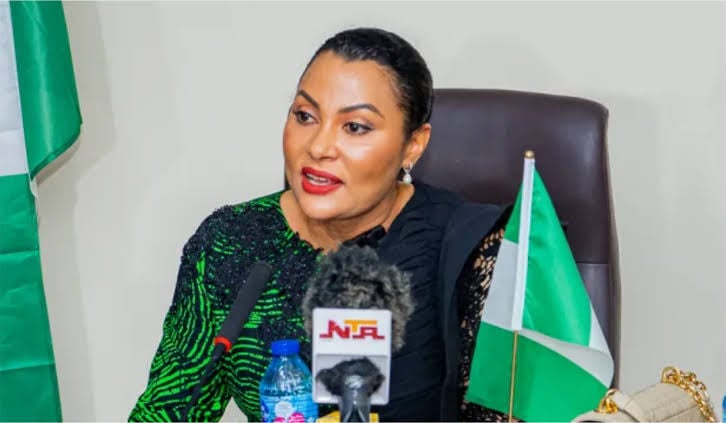
The Minister of State for Finance, Doris Uzoka-Anite, and the Commissioner for Insurance, National Insurance Commission (NAICOM), Olusegun Omosehin, have underscored the critical role of insurance in cushioning West Africa against the growing economic and developmental risks posed by climate change.
Both leaders made the call on Monday in Lagos during the opening ceremony of the West African Insurance Companies Association (WAICA) 2025 Education Conference, themed “The West African Insurer in the Face of Climate Change.” The three-day conference brought together insurance regulators, policymakers, and industry leaders from Nigeria, Ghana, Sierra Leone, Liberia, and The Gambia to explore innovative strategies for climate resilience in the sub-region.
Represented by the Director of Home Finance in the Ministry of Finance, Dr. Ali Mohammed, Uzoka-Anite described climate change as “not only an environmental challenge but also a financial imperative.”
“Across West Africa, floods, droughts, and coastal erosion have destroyed livelihoods, strained public finances, and threatened food security,” she said. “Each disaster brings human tragedy and heavy fiscal burdens. This makes climate risk a macroeconomic concern that requires proactive financial planning.”
She emphasised that insurance must become “an indispensable mechanism to share and absorb shocks governments alone cannot handle,” noting that traditional budgets are inadequate to address the scale of climate-related losses already costing Africa billions annually.
Uzoka-Anite revealed that Nigeria is advancing frameworks that combine sovereign risk insurance, regional disaster risk pools, and public-private climate finance mechanisms to ensure rapid disaster response and fiscal stability.
She also urged regional cooperation, proposing that WAICA should lead efforts through three key pillars:
- Developing regional risk-pooling and reinsurance platforms,
- Expanding data and expertise in climate modelling and forecasting, and
- Building professional capacity for sustainable and innovative insurance products.
“Such cooperation,” she said, “will transform insurance from a business venture into a development enabler for agriculture, trade, and small enterprises.”
In his address, NAICOM’s Commissioner for Insurance, Olusegun Omosehin, said climate change has become a macroeconomic threat, influencing fiscal policy, national budgets, and the stability of financial systems across the sub-region.
“The insurance industry must move beyond profit and policy to become a pillar of resilience, equity, and transformation,” Omosehin stated. “Within this crisis lies an opportunity to redefine the role of insurance as a force for sustainable development.”
He highlighted the Nigerian Insurance Industry Reform Act 2025 as a milestone that modernises the regulatory framework, enhances consumer protection, and strengthens the financial resilience of insurers.
Omosehin called for innovation in product design, including parametric and micro-insurance solutions tailored to the region’s climate realities, and urged investment in data and technology to improve climate modelling and risk assessment.
He further appealed for stronger collaboration among insurers, reinsurers, and regulators across West Africa, stressing the need for inclusivity.
“We must expand insurance access to farmers, market women, artisans, and micro-entrepreneurs — the backbone of West African economies,” he said. Quoting an African proverb, he added, “The rain does not fall only on one roof. Just as rain falls on many roofs, so too must our response be collective.”
WAICA President, Solomon Sesay, in his remarks, expressed optimism that the conference would yield actionable insights.
“We are confident that the lessons from this gathering will strengthen the industry’s collective response to climate change and enhance resilience across the sub-region,” he said.