




The Nigeria Deposit Insurance Corporation (NDIC) and the Economic and Financial Crimes Commission (EFCC) have agreed to deepen collaboration to recover stolen bank assets, prosecute financial crimes and strengthen Nigeria’s banking system.
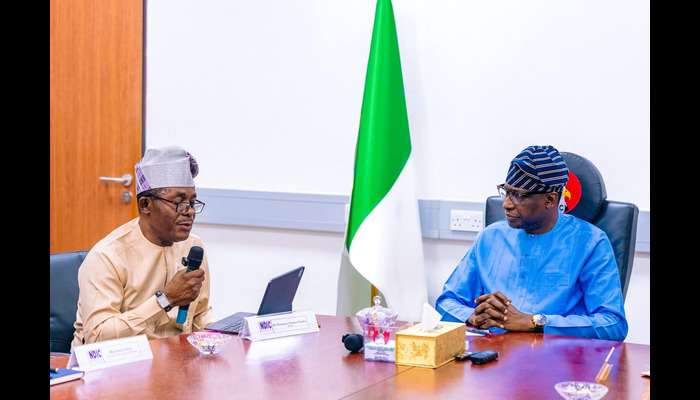
NDIC Managing Director and Chief Executive Officer, Mr Thompson Oludare Sunday, made this known during a courtesy visit by the corporation’s management team to EFCC Chairman, Mr Olanipekun Olukoyede, at the commission’s headquarters in Abuja.
Sunday said tighter cooperation with the EFCC was crucial to the liquidation of failed banks, particularly in tracing and recovering assets, settling outstanding debts and paying uninsured depositors.
He stressed that tackling asset stripping, concealment and banking fraud requires stronger joint investigations and enforcement actions, adding that both institutions must work closely to bring perpetrators to justice and protect the financial system.
“Through our core mandates of deposit guarantee, bank supervision, distress resolution and bank liquidation, the NDIC plays a critical role in safeguarding financial stability,” he said, noting that depositor protection and public confidence remain the corporation’s top priorities.
Responding, EFCC Chairman Olukoyede reaffirmed the commission’s commitment to sustained collaboration with the NDIC, describing their partnership as long-standing and productive, particularly in bank fraud investigations and capacity building.
He briefed the NDIC delegation on the EFCC’s Bank Fraud Section and urged the corporation to forward pending cases for speedy review and tracking.
Olukoyede also highlighted the commission’s Fraud Risk Assessment and Control Department, which focuses on proactive compliance, risk management and stronger internal controls across public and private institutions, describing these efforts as central to stabilising the economy.
Both agencies pledged to intensify joint operations against financial crimes, enhance asset recovery and prosecute offenders whose actions threaten the integrity of Nigeria’s banking sector.