




Recent building collapses in Lagos and Rivers states have intensified calls for the full enforcement of compulsory builders’ insurance provisions under the Nigeria Insurance Industry Reform Act (NIIRA) 2025, with industry stakeholders warning that stricter compliance could help protect lives, property and victims of construction-related disasters.
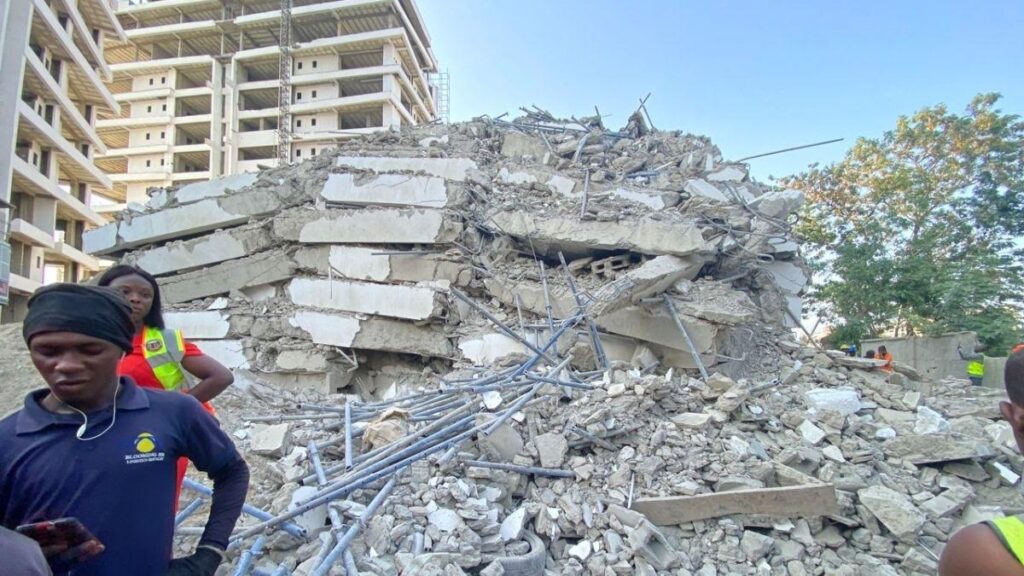
The renewed push follows the collapse of a three-storey shopping complex in the Alakija area of Lagos and a four-storey building under construction in Port Harcourt on June 25. While the Lagos incident claimed nine lives and left 26 others injured, the Port Harcourt collapse trapped several construction workers, three of whom were rescued.
Industry observers say both structures fall within categories required by law to carry compulsory insurance, yet there has been no confirmation that either building was insured. They argue that the recurring absence of insurance coverage in many building collapse cases continues to leave victims and their families without financial compensation.
Under the NIIRA 2025, developers of buildings exceeding two floors are required to obtain Builders’ Liability Insurance before construction begins, while owners and occupiers of public buildings must insure such properties against risks including collapse, fire, flood and other hazards. The legislation also prescribes tougher penalties for non-compliance, including substantial fines and possible imprisonment.
Insurance experts believe effective implementation of the law would not only provide compensation for victims but also encourage developers to adhere to higher safety standards throughout the construction process. They note that mandatory insurance creates financial accountability for negligence and strengthens risk management across the sector.
Although some state governments have begun enforcing compulsory building insurance, compliance remains low. In Lagos, authorities have introduced verification measures for insurance policies covering multi-storey commercial buildings, but only a fraction of affected properties have been confirmed to possess valid insurance despite widespread regulatory infractions.
The National Insurance Commission (NAICOM) has repeatedly pledged to ensure full implementation of the NIIRA 2025. Commissioner for Insurance Olusegun Ayo Omosehin has described the legislation as a transformative framework for the industry and said enforcement of compulsory insurance would be pursued in collaboration with relevant government agencies, including the Nigeria Police Force.
According to the commission, enforcing Builders’ Liability Insurance is intended to prevent avoidable tragedies rather than merely punish offenders. The initiative is expected to improve compliance with safety regulations while ensuring that victims of building failures are not left without financial support.
Analysts maintain that with building collapses continuing to occur across the country, stricter enforcement of compulsory insurance provisions has become increasingly urgent. They argue that broader compliance would improve financial resilience, protect the public and strengthen confidence in Nigeria’s construction and insurance sectors.