





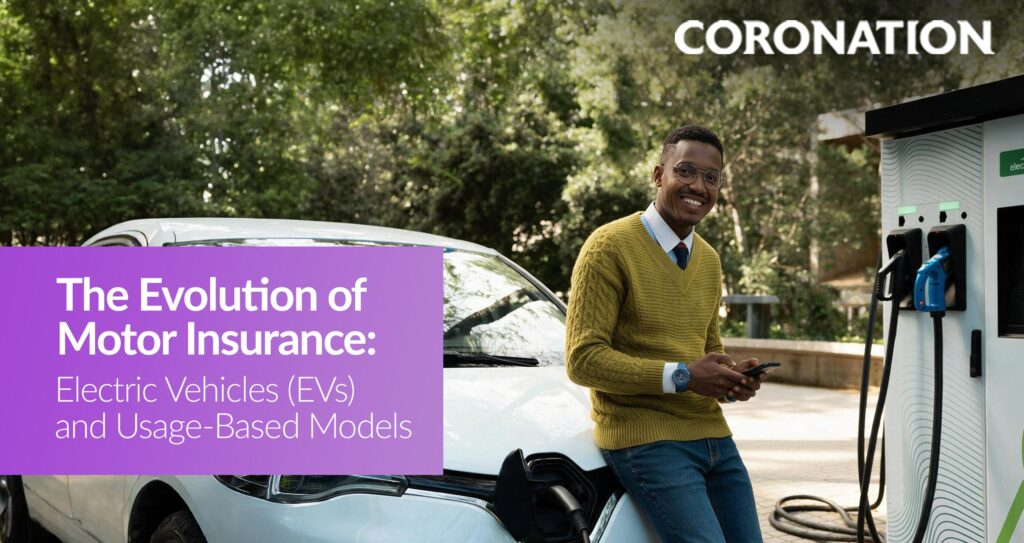
Buying motor insurance in Nigeria has traditionally followed a linear process.
After someone buys a car, they contact an insurer, choose between Third-Party or Comprehensive Motor Insurance, complete some paperwork, pay their premium, and renew the policy annually.
Insurers have had little to no data about how their customers drive. Whether they spend four hours in traffic in Lagos daily or only drive to church on Sundays, premiums have traditionally been determined largely by vehicle type, policy type, and location.
That model is evolving.
For example, two people live in the same estate in Lagos and own similar SUVs bought in the same year. One works remotely and drives less than 5,000 kilometres annually. The other is a retail sales manager who travels to different parts of the city weekly.
Under traditional motor insurance, they could pay similar premiums despite having very different risk profiles.
Now imagine a third person who lives in the same estate but owns an electric vehicle (EV). Their vehicle may incorporate connected technology that provides more detailed information about mileage and driving behaviour, while the vehicle itself presents a different risk profile from a conventional petrol-powered car.
As the adoption of electric vehicles, connected cars, and usage-based insurance (UBI) develops globally, the way insurers think about risk is evolving as well. Africa, including Nigeria, is still at an early-to-transition stage of this evolution.
However, the technology, regulatory interest, market infrastructure, and early industry initiatives are gradually creating the foundations for a more data-driven and personalised insurance ecosystem.
Mobility is Changing Fast
Transportation continues to benefit from technological progress.
In the last five years, we have witnessed a gradual transition from petrol-powered vehicles towards electric mobility, autonomous systems, and software-defined vehicles.
Globally, electric vehicle adoption is growing as governments seek cleaner transportation, and consumers look for lower operating costs.
Although the EV market in Nigeria is still relatively small, interest in the vehicles has increased steadily, driven by rising fuel costs, private-sector investment, and growing awareness of the long-term benefits of electric mobility.
However, Nigeria’s EV transition is not being driven by consumers and businesses alone. Government policy is also beginning to provide clearer support for the sector.
In March 2026, the Federal Government expanded the mandate of the Presidential Initiative on Compressed Natural Gas (PiCNG) to include electric vehicles.
The initiative is now known as the Presidential Initiative on Compressed Natural Gas and Electric Vehicles (PiCNG & EV), with a broader mandate to coordinate Nigeria’s clean mobility strategy, including the development and rollout of electric vehicles, EV charging infrastructure, and related investments nationwide.
This development is particularly relevant to the insurance industry. As EV adoption grows, insurers will encounter new risks, underwriting considerations, and claims implications.
It also signals an important shift: electric vehicles are no longer merely a consumer technology or automotive issue; they are increasingly becoming part of Nigeria’s broader transportation and energy policy.
The National Automotive Design and Development Council (NADDC) is also collaborating with Pi-CNG & EV to accelerate electric mobility and alternative-fuel adoption.
The collaboration includes policy alignment, data sharing, capacity building, and market development, all of which have implications for the future automotive and insurance ecosystem.
Analysis has shown that EVs can be particularly suited to urban commuting and commercial fleet operations in Nigeria, even though charging infrastructure and electricity reliability remain significant hurdles.
Nigeria is not isolated in this adoption. Other African countries such as Kenya, South Africa, Ethiopia, and others are investing in local EV assembly, charging infrastructure, and financing models to make electric mobility more accessible.
For insurers, this transition represents new opportunities and responsibilities.
The Peculiarity of Electric Vehicle Insurance
Insuring an electric vehicle may seem no different from insuring a petrol vehicle. After all, both types of vehicles are exposed to accidents and other conventional motor risks. Upon closer investigation, however, important differences emerge.
Electric vehicles have high-value batteries, sophisticated sensors, advanced software, electronic systems, and specialised repair requirements. Replacing a damaged battery or other specialised component can cost significantly more than repairing a conventional engine component.
These repairs may require professionals with specialised training and access to manufacturer-specific parts, diagnostics, and equipment.
At the same time, EVs generally have fewer moving parts than internal combustion engine vehicles, which can reduce routine maintenance requirements and some forms of mechanical failure.
For insurers, this creates a more nuanced risk picture. Some claims may be more expensive because of specialised components, while other maintenance-related issues may be less frequent.
The overall claims experience will therefore require data and experience rather than assumptions based solely on conventional motor insurance.
As more electric vehicles get on Nigerian roads, insurers will be required to design products and underwriting approaches that cater to their unique risks rather than simply adapting motor insurance policies created for petrol vehicles.
Features such as high-value batteries, specialised parts, electronic systems, sensors, and charging equipment will require insurers to take a fresh look at how EV risks are assessed and managed.
This will have implications for underwriting, premium pricing, claims handling, risk management, and the availability of suitable repair and technical support networks.
Behaviour is Being Insured Too
The most significant transformation may not be electric vehicles themselves. It is data.
Modern vehicles, particularly connected vehicles, can generate information about speed, braking patterns, mileage, acceleration, driving times, and other aspects of vehicle use.
This data can support an insurance model known as Usage-Based Insurance (UBI). UBI enables insurers to assess actual driving behaviour and vehicle usage rather than relying solely on traditional proxies for risk.
Usage-Based Insurance can allow safer drivers to benefit from lower premiums, while drivers who use their cars less frequently or cover fewer kilometres may be able to pay less than those who drive extensively, depending on the product design and underwriting approach.
With UBI, motor insurance can become more evidence driven. It can also foster a stronger partnership between insurers and customers by enabling safer driving through incentives, personalised feedback, and rewards.
EV and Usage-Based Insurance in Nigeria: An Industry in Transition
For a Nigerian insurance industry that is still developing these capabilities, it would be premature to describe EV insurance and UBI as fully developed or mature markets.
Nigeria is at an early-to-transition stage, with initial market developments and practical examples beginning to emerge.
While the full potential of UBI and EV insurance has not yet been realised, the foundations are gradually being established.
Government policy, connected-vehicle technology, telematics, GPS-enabled devices, emerging EV infrastructure, and industry collaboration are creating the conditions for insurers to develop more data-driven approaches to motor risk.
The emerging Nigerian landscape can be understood through a few important developments:
| Examples in Nigeria | What it demonstrates
|
Insurance relevance
|
| PiCNG & EV expansion, March 2026 | Government commitment to EV development | Emerging EV insurance market |
| Telematics/GPS/connected vehicles | Technology capable of supporting UBI | Usage-based pricing and behavioural risk assessment |
| NADDC–PiCNG & EV collaboration | Policy, data, and capacity development
|
Future underwriting and technical capability |
These developments do not mean that UBI or EV insurance has already reached scale in Nigeria. Rather, they show that the technology, policy environment, and market infrastructure needed to support future growth are beginning to take shape.
Can Usage-Based Insurance Thrive in Nigeria?
Nigeria could provide a strong environment for testing and developing usage-based insurance, but adoption will depend on the availability of reliable data, connected-vehicle infrastructure, consumer trust, appropriate product design, and insurers’ ability to translate data into sound underwriting decisions.
Technology is instrumental to the success of UBI. Smartphones, GPS-enabled devices, telematics, and connected-vehicle systems can make it possible to gather driving insights without requiring expensive hardware in every case.
For many Nigerian car owners who drive occasionally, usage-based insurance could offer a fairer and more flexible alternative to traditional premium pricing, depending on how the products are structured.
It could also be valuable to commercial fleet operators through improved risk management, reduced accident frequency, and more efficient vehicle utilisation.
Policyholders Expect Personalisation
Nearly every service today has a degree of personalisation.
Streaming platforms recommend content based on preferences. Fitness platforms offer plans curated around a customer’s schedule. Banking apps allow customers to choose the features they want to see.
Many customers increasingly expect insurance to work in similar ways. Rather than offering one-size-fits-all policies, policyholders may increasingly expect insurers to move towards personalised protection that fits their lifestyles and behaviours.
This expectation reinforces the notion that motor insurance is no longer about merely replacing damaged vehicles or paying for repairs. Rather, it is becoming part of a broader ecosystem of mobility, technology, data, and customer experience.
A Data-Driven Future for Motor Insurance
Innovation will always raise new questions. As insurers collect more driving and vehicle data, they will be entrusted with safeguarding that information and protecting customers’ privacy.
Customers must also understand what data is collected, how it may influence premiums, and how it is stored and used. If insurers combine innovation with strong data governance, they can build the trust required to make data-driven insurance sustainable over the long term.
However, this transition will not happen overnight. Nigeria continues to face infrastructure challenges around EV charging networks, electricity reliability, affordability, data availability, and technical capacity.
Just as every major transformation begins gradually, motor insurance is approaching a turning point.
More electric vehicles on Nigerian roads, together with the growth of connected technologies, could increase demand for personalised motor insurance products and provide insurers with better insight into how the vehicles they insure are used.
The insurers that will lead that era are not necessarily those with the largest customer base. They will be the ones that understand that motor insurance is shifting from being about just the car to being about the driver, the data, the vehicle, and protection that is specific to each policyholder’s unique journey.
To inquire about motor insurance for electric vehicles, or to learn about the other products Coronation Insurance offers, contact us via email at info@coronationinsurance.com.ng or call 02-01-2275475 | 02-01-2275476.
Explore more articles from Coronation Insurance Plc at https://coronation.ng/insights/