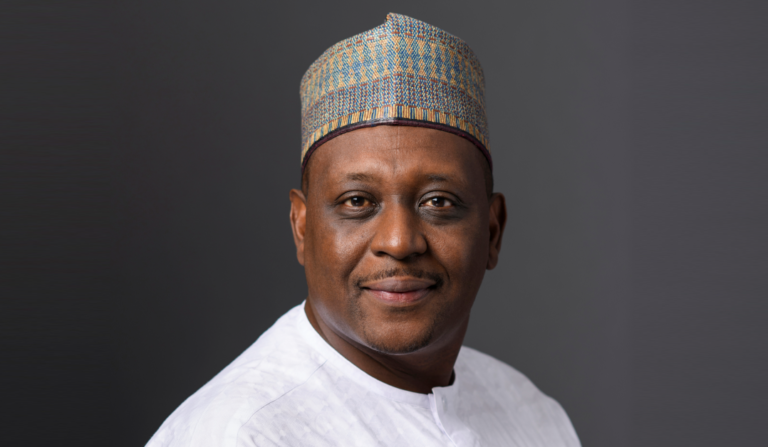






The Nigeria Social Insurance Trust Fund (NSITF) has called on the Nigerian Bar Association (NBA) to champion legal reforms that would extend workplace protection and social security to informal-sector, gig and platform workers.
The Managing Director and Chief Executive of the NSITF, Oluseun Faleye, made the appeal at the 66th Annual General Conference of the NBA in Port Harcourt, Rivers State.
Speaking through the Fund’s General Manager, Abuja Region, Bridget Ashang, Faleye said Nigeria’s evolving labour market required a corresponding expansion of the legal framework governing employment and social protection.
He argued that existing laws were largely designed around conventional formal employment, leaving workers in the informal economy and emerging employment arrangements with inadequate protection.
Faleye said social security should be viewed as a matter of social justice rather than charity. He noted that it provides healthcare and income protection in circumstances such as sickness, old age, unemployment, employment-related injuries, maternity and the loss of a family breadwinner.
He said the Employees’ Compensation Scheme was established to ensure that workers who suffer employment-related injuries are not abandoned without support.
According to him, the scheme helps workers recover, maintain income and return to productive activity, while reducing employers’ liabilities and encouraging stronger occupational health and safety practices.
The NSITF chief referenced International Labour Organisation standards, noting that the ILO’s Social Security Convention No. 102 recognises nine major areas of social protection, including medical care, sickness, unemployment, old age, employment injury, family, maternity, invalidity and survivors’ benefits.
Faleye, however, said significant gaps remained in Nigeria’s legal framework, particularly for workers whose employment does not fit the traditional employer-employee model.
To close the gaps, he urged the NBA to strengthen public awareness of workplace protection and social security while contributing more actively to labour-law reform.
He encouraged lawyers to consider corporate audits and strategic test-case litigation that could help modernise the legal interpretation of terms such as “employee,” “employer” and “workplace.”
The NSITF also called for amendments to labour laws to expressly accommodate informal workers, gig workers and platform-based workers.
Faleye further advocated clearer rules on platform liability in employment-related matters, arguing that emerging forms of work require legal frameworks that reflect the realities of the modern labour market.
He urged the NBA to support the ratification and domestication of relevant ILO conventions, describing international standards as useful benchmarks for developing a more inclusive social protection system.
The NSITF boss also stressed the need for inclusiveness when drafting laws establishing public institutions, saying workers should not lose access to basic protections simply because they operate outside conventional employment structures.
“Social security is how we honour that sweat. It is how we say: Your work has dignity and your life has value,” Faleye said.
He called for closer collaboration between the NBA, NSITF and other stakeholders to strengthen Nigeria’s social protection framework.
According to him, effective workplace protection requires both sound legislation and institutions capable of implementing it.
“Without the law, the Fund is silent. Without the Fund, the law is empty. Together, we can write a new social contract for Nigerian workers,” he said.
Faleye warned that failure to address the existing legal gaps could leave large numbers of workers without adequate protection as Nigeria’s labour market continues to evolve.
His call came as lawyers gathered in Port Harcourt for the NBA’s annual conference, where legal, economic and policy issues affecting the country are being examined.