The National Insurance Commission (NAICOM) is facing a difficult balancing act following the conclusion of Nigeria’s latest insurance industry recapitalisation exercise, with some companies that failed to meet the new capital requirements challenging regulatory actions in court.
The development has reopened a long-standing debate over how the regulator should deal with operators that miss recapitalisation deadlines while preserving the credibility of the regulatory framework.
The latest exercise is regarded as a major test for NAICOM under Commissioner for Insurance, Olusegun Ayo Omosehin, following several previous attempts at strengthening the financial capacity of insurance companies that ended without a conclusive outcome.
Previous administrations led by Mohammed Kari and Sunday Thomas introduced different approaches to recapitalisation, but some of those initiatives were stalled by legal challenges and opposition from operators unable to meet the prescribed requirements.
New capital regime
NAICOM released its recapitalisation guidelines in September 2025, giving insurance companies 12 months to meet the new minimum capital requirements.
The commission said the exercise was designed to strengthen the financial capacity of insurance and reinsurance companies, implement relevant provisions of the Nigerian Insurance Industry Reform Act (NIIRA) 2025 and align capital requirements with companies’ risk exposure.
The guidelines also addressed issues relating to admissible assets and liabilities and provided a framework for the transition to the new capital regime.
NAICOM had repeatedly warned that the deadline would not be extended.
Despite the warnings, a number of operators failed to meet the requirements by the stipulated date. Some subsequently resorted to litigation, while others have continued efforts to secure additional capital after the deadline elapsed.
The situation has placed NAICOM in a difficult position. Granting additional time could provide struggling companies with an opportunity to recapitalise, protect jobs and preserve businesses with a history of compliance. But relaxing the deadline after repeatedly declaring it final could weaken the authority of the regulator and undermine future recapitalisation exercises.
Six firms affected
About six insurance companies reportedly failed to secure a place on the final list of recapitalised operators. They include Universal Insurance Plc, NICON Insurance Limited, Nigeria Reinsurance Corporation, Staco Assurance, Royal Exchange Prudential and the government-owned Nigeria Agricultural Insurance Corporation.
Following the failure of affected companies to meet the prescribed requirements, NAICOM moved to revoke licences and appoint receivers or liquidators.
Universal Insurance, for instance, lost its operating licence on August 14, 2026, after failing to meet the N15 billion minimum capital requirement for general insurance business.
Its failure came as a surprise to some stakeholders, particularly amid reports that the company had been involved in merger discussions with Great Nigeria Insurance.
However, the talks did not produce a successful transaction before the recapitalisation deadline. Reports surrounding the proposed deal have included claims and counterclaims, while Great Nigeria Insurance was subsequently reported to have secured a new investor.
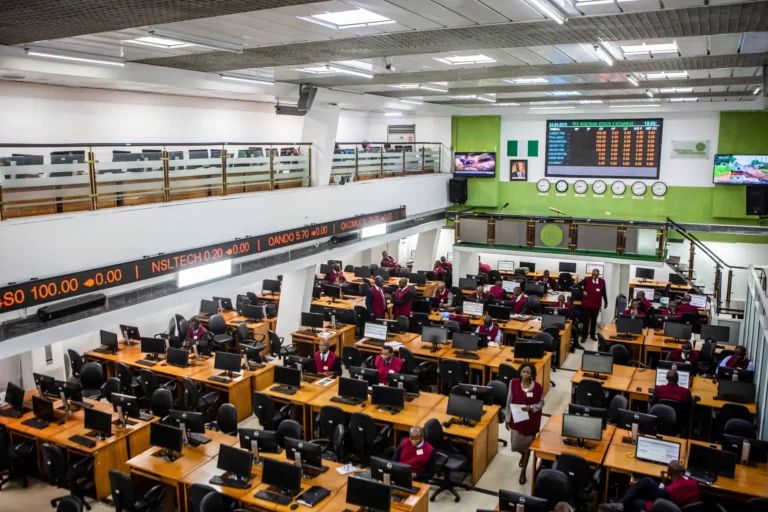
The regulatory action has also affected Universal Insurance’s position on the Nigerian Exchange, with its shares suspended and a receiver/provisional liquidators appointed.
The company has since taken the matter to the Federal High Court in Lagos, challenging NAICOM’s action.
NICON, Nigeria Re join legal battle
NICON Insurance Limited and Nigeria Reinsurance Corporation have also had their operating licences revoked after failing to meet the N35 billion capital threshold applicable to reinsurers under the new regime.
NAICOM subsequently froze the companies’ bank accounts and appointed liquidators.
The affected companies are challenging aspects of the regulator’s actions in court, including issues relating to fees associated with the regulatory process.
The legal battles could further complicate NAICOM’s efforts to bring the recapitalisation exercise to a definitive conclusion.
Lessons from past exercises
Nigeria’s insurance industry has a long history of recapitalisation attempts, many of which were disrupted by legal challenges.
In 1997, former Commissioner for Insurance, the late Oladipo Bailey, sought to increase minimum operating capital from N20 million to N500 million. The exercise resulted in several court cases.
A decade later, Fola Daniel successfully completed a recapitalisation programme that raised minimum capital to N2 billion for life insurers, N3 billion for non-life insurers, N5 billion for composite insurers and N10 billion for reinsurers.
Subsequent attempts did not achieve the same level of finality.
Between 2018 and 2019, Kari introduced a risk-based capital model, while Sunday Thomas pursued a minimum share capital approach between 2020 and 2021. Both initiatives encountered legal resistance.
The recurring pattern has left regulators vulnerable to delays whenever affected operators challenge recapitalisation measures in court.
Industry divided over next step
Industry analysts believe NAICOM must now choose between maintaining a firm regulatory position and allowing additional opportunities for companies that are still attempting to raise the required capital.
Those favouring flexibility argue that giving viable businesses another chance could protect employees, policyholders and the broader economy.
However, others warn that permitting companies to recapitalise after the deadline could create a precedent that weakens future regulatory directives.
They argue that operators may become less inclined to comply with deadlines if they believe they can negotiate additional time or rely on litigation after failing to meet stipulated requirements.
Some industry operators who spoke on the matter privately also urged NAICOM to exercise caution, particularly in dealing with companies that have historically complied with regulatory requirements.
They maintained that the regulator must balance the need to preserve businesses and jobs with the necessity of maintaining confidence in its rules.
Policyholders caught in the middle
Beyond the companies themselves, the fate of policyholders has become another major concern.
The revocation of licences and appointment of liquidators could create uncertainty for customers who have outstanding claims or active policies with affected insurers.
Stakeholders therefore believe that the effective operation of the Insurance Policyholders’ Protection Fund (IPPF) has become increasingly important.
NAICOM recently inaugurated the committee responsible for the fund, and analysts are urging the commission to accelerate efforts to ensure that the mechanism becomes fully functional.
They also questioned whether NAICOM could have intervened earlier in some of the affected companies, pointing to its previous takeover of African Alliance as an example of intervention before the recapitalisation deadline.
For now, the courts will have a significant role in determining the fate of some of the affected operators, while NAICOM faces pressure to demonstrate that the latest recapitalisation exercise will not follow the pattern of previous initiatives.
The central challenge for the regulator is to protect policyholders and viable businesses without compromising the credibility of a capital regime it has spent the past year enforcing.