




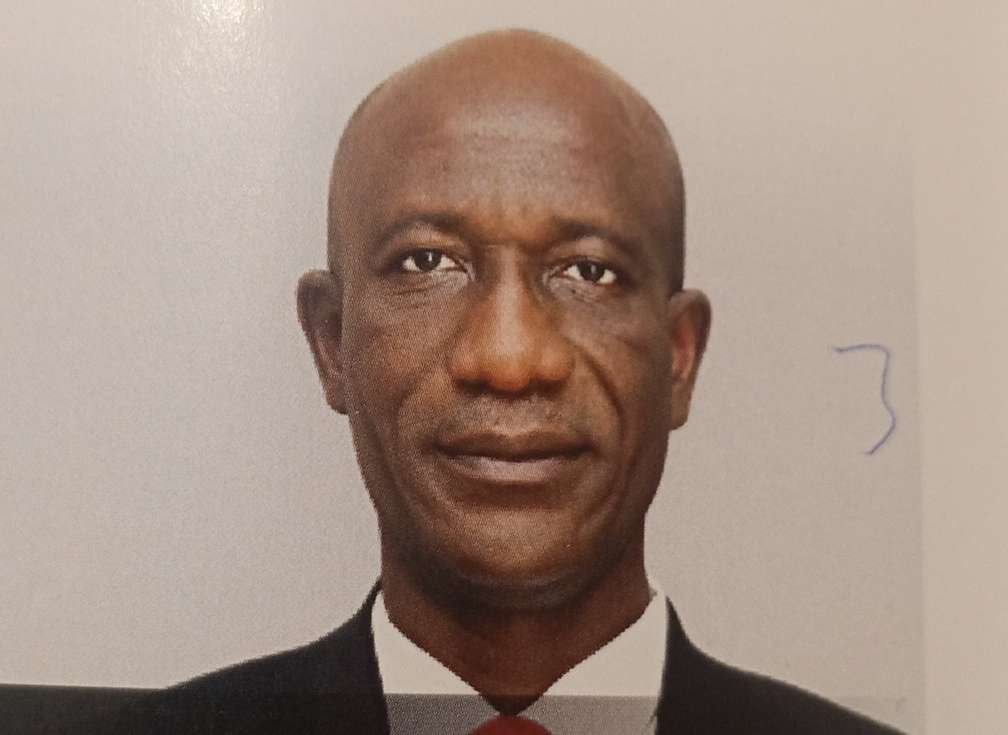
Journalists should go beyond creating awareness about health issues and use their reporting to promote accountability and improve healthcare delivery in Nigeria, the President of the Healthcare Providers Association of Nigeria, Dr Augustine Aipoh, has said.
Aipoh, who is also the Medical Director of Olive Medicare Hospital, Lagos, made the call on Tuesday while presenting a paper titled, “Beyond Awareness: The Journalist As a Catalyst for Better Healthcare Delivery in Nigeria,” at a two-day journalism workshop organised by Insurance Publication Ltd. and sponsored by the Africa Re Foundation.
The workshop, themed “The Universe of Insurance and Journalism: Risk Everywhere, in Everything,” focused on improving journalists’ understanding of insurance and their role in reporting issues surrounding risk, healthcare and financial resilience.
Aipoh said the scale and complexity of Nigeria’s healthcare challenges made informed and investigative journalism increasingly important.
He identified unequal access to quality healthcare, high out-of-pocket spending, inadequate infrastructure and healthcare personnel, misinformation and low insurance coverage among the issues requiring sustained media attention.
According to him, healthcare delivery extends beyond the treatment of illness to include health promotion, disease prevention, diagnosis, rehabilitation, palliative care, healthcare financing, infrastructure, technology and the health workforce.
He noted that healthcare financing, particularly the relationship between health insurance and out-of-pocket payments, plays a significant role in determining whether Nigerians can obtain quality medical care.
Aipoh described journalists as occupying an important position between citizens, healthcare providers and institutions, noting that their reporting can shape public understanding, influence trust in healthcare professionals and draw policymakers’ attention to areas requiring intervention.
“The opportunity is to move from reporting what happened to helping society understand what must change,” he said.
Insurance reporting should focus on patients
Aipoh urged journalists covering health insurance to move beyond technical terminology and explain how insurance policies affect patients in practical terms.
He said health insurance should not be regarded simply as a system for paying hospital bills, but as a mechanism for managing the financial and health risks associated with illness, accidents, chronic conditions, emergency treatment and potential loss of income.
He added that an effective insurance system should support preventive and primary healthcare and encourage people to seek care early.
Providing a historical perspective, Aipoh said an early attempt to introduce a contributory or prepaid health insurance arrangement in Nigeria was proposed by Dr Moses A. Majekodunmi in Lagos in 1962.
He explained that government revenue played a major role in financing healthcare from the 1960s through the 1980s, before declining oil revenues and economic challenges placed greater pressure on public financing and contributed to increased out-of-pocket spending.
He noted that health insurance subsequently received greater policy attention, leading to the establishment of the National Health Insurance Scheme under the National Health Insurance Scheme Act of 1999. The scheme was formally launched in 2005, initially targeting workers in the formal sector before efforts were expanded to cover informal workers, communities and vulnerable groups.
Aipoh further referenced the 2022 National Health Insurance Authority Act, which transformed the National Health Insurance Scheme into the National Health Insurance Authority and strengthened its mandate to expand health insurance coverage.
Journalists urged to interrogate insurance promises
Aipoh challenged journalists to translate insurance terminology into questions that reveal whether Nigerians are actually receiving the benefits promised under their policies.
He said terms such as capitation, fee-for-service, benefit packages, accreditation, claims, pre-authorisation, co-payment and referral should be examined from the perspective of patients rather than reported only as technical concepts.
For example, he said reporting on benefit packages should establish what medical services an insured person can actually access under the package.
He also urged journalists to examine whether capitation payments to healthcare providers are sufficient to support the delivery of quality services.
On accreditation, Aipoh said reporters should investigate whether insured patients can obtain the services covered by their policies at accredited healthcare facilities.
He encouraged journalists to follow the entire patient journey, beginning with enrolment and financing and extending through accreditation, hospital treatment, claims processing and the eventual outcome.
“The real test of a policy is not its announcement but its effect on the patient,” he said.
Aipoh identified affordability, availability, access, quality, claims settlement and patient experience as key areas journalists should examine when reporting on health insurance.
He urged reporters to ask whether ordinary Nigerians can afford insurance coverage, whether accredited healthcare providers are available in their communities, whether patients can obtain care when they need it and whether insurance coverage ultimately results in accessible and quality healthcare.
He said journalism that answers these questions can help move public discussion beyond awareness and contribute to greater accountability within Nigeria’s healthcare system.