




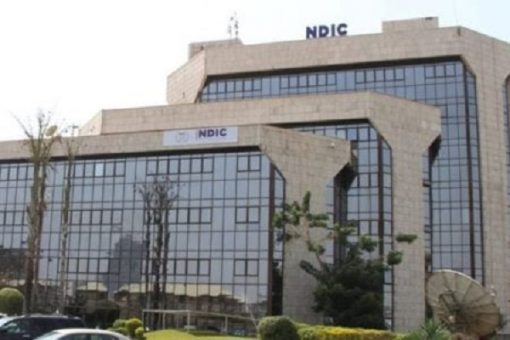
The Nigeria Deposit Insurance Corporation (NDIC) has cautioned Nigerian banks against treating recapitalisation as a guarantee of stability, saying stronger balance sheets must be matched by effective risk management, regulatory compliance and sound corporate governance.
NDIC Managing Director and Chief Executive Officer Thompson Oludare gave the warning in Lagos during a three-day workshop for the corporation’s senior management and executive staff, organised in collaboration with the Bureau of Public Procurement (BPP).
The workshop, themed “Driving Excellence through Transparency, Compliance, and Efficiency,” focused on strengthening institutional effectiveness and accountability.
Oludare described the banking industry’s recapitalisation exercise, which concluded on March 31, as an important step towards strengthening Nigeria’s financial system. However, he stressed that raising additional capital was only the beginning.
“Capital is a very important aspect in banking,” he said, while emphasising that regulators and examiners would also scrutinise how banks manage risk, comply with regulations and maintain effective governance structures.
He urged banks to deploy their additional capital prudently, warning that simply expanding financial capacity without strengthening internal controls could leave institutions vulnerable to future distress.
Bank Failures Remain a Concern
The NDIC’s warning comes as the corporation continues to manage the consequences of financial institution failures.
The corporation was recently appointed official liquidator for 46 microfinance banks whose operating licences were revoked by the Central Bank of Nigeria (CBN) on July 1.
According to Oludare, the NDIC has commenced verification and payment of insured deposits to eligible customers. The process is being supported by Bank Verification Numbers (BVN) and alternative accounts held by depositors in other banks, allowing verified customers to receive guaranteed deposits without necessarily visiting NDIC offices.
He stressed that licence revocation remained a last resort, noting that regulators have several resolution options available before shutting down a financial institution.
These include purchase-and-assumption arrangements, bridge banks, financial support and changes in management.
“Revocation of licence is the last thing that we consider, and we do not take those things lightly,” Oludare said.
He explained that the affected microfinance banks had failed to meet conditions attached to their operating licences, leaving revocation as the most appropriate resolution option in those cases.
Heritage Bank Shows Cost of Failure
Oludare pointed to the ongoing liquidation of Heritage Bank as an example of how the consequences of a bank failure can extend for years beyond the initial licence revocation.
The CBN revoked Heritage Bank’s licence on June 3, 2024, after which the NDIC began the liquidation process and payment of insured deposits.
The corporation has since been recovering assets, pursuing debtors and realising investments to raise funds for depositors whose balances exceed the statutory insurance limit.
NDIC records show that the corporation declared a first liquidation dividend of N46.6 billion in April 2025 and a second dividend of N24.3 billion in January 2026. The cumulative liquidation dividend stood at 14.4 kobo for every N1 of outstanding balance above the insured limit.
Oludare said the NDIC would continue recovering debts and disposing of assets to generate additional funds for depositors, although some assets remain tied up in legal disputes.
The experience highlights the wider consequences of bank failure: licence revocation can trigger prolonged asset recovery, litigation, debt collection and liquidation processes before all affected stakeholders are fully settled.
Procurement Efficiency Becomes Part of Deposit Protection
The NDIC chief also linked effective procurement to the corporation’s ability to protect depositors and resolve failed institutions efficiently.
He said procurement forms an important part of the NDIC’s statutory responsibilities, particularly because the corporation manages assets, recovers debts and disposes of properties belonging to failed institutions.
Inefficient procurement, he warned, could increase the cost of resolving failed financial institutions and reduce the resources available for deposit protection.
BPP Director-General Adebowale Adedokun said the bureau’s reforms were designed to strengthen scrutiny of government contracts through price intelligence, benchmarking and digital procurement.
He disclosed that the BPP recorded about N400 billion in savings in the first six months of 2026, following approximately N1.1 trillion in savings in 2025 through price intelligence and related procurement reforms.
Adedokun said the reforms were increasingly forcing contractors to reconsider inflated bids because proposed costs are subjected to benchmarking before approval.
Push for Digital Procurement
The BPP is also accelerating the digitisation of public procurement, including electronic submissions and e-government procurement.
Adedokun said the reforms would reduce the need for contractors to travel to Abuja to pursue government contracts and could make the system more accessible to businesses outside the Federal Capital Territory.
The bureau is also considering community-based procurement for smaller projects and upgrading its database of contractors, consultants and service providers to encourage sector-specific competition.
Adedokun said greater specialisation could improve the quality of public projects by ensuring that contractors compete in areas where they have demonstrated expertise.
He also identified technology as a tool for reducing procurement leakages, including efforts to discourage the use of private email accounts for official government transactions and increase reliance on government-domain communication.
Artificial intelligence, he added, could eventually support procurement functions such as costing, analysis and report preparation.
The Post-Recapitalisation Challenge
For Nigeria’s banking sector, the NDIC’s message comes at a critical point following the industry’s recapitalisation exercise.
The key question now is whether banks can translate stronger capital positions into sustainable growth while avoiding the governance, compliance and risk-management weaknesses that can eventually threaten financial institutions.
For the NDIC, the continued resolution of failed banks underscores the importance of early intervention, effective supervision, efficient procurement and credible deposit insurance.
Oludare said the corporation’s objective remained a financial system in which depositors have confidence that their funds are protected, while banks operate under sufficient discipline to prevent avoidable failures.
“We do not expect institutions to fail,” he said, while acknowledging that failures remain an unavoidable feature of financial systems.
The message from the deposit insurer is clear: recapitalisation may provide banks with a stronger foundation, but sound governance, disciplined risk management and responsible deployment of capital will determine whether that foundation translates into lasting stability.