




Nigeria is positioning itself for a larger share of Africa’s expanding Islamic finance market, with the growth of non-interest financial services creating fresh opportunities for insurers, fintechs, investment firms and other financial-sector players.
The country’s Islamic and non-interest finance industry was valued at N5.77 trillion in 2025, including N1.19 trillion in sovereign Sukuk, according to a Proshare report cited by Shariah Adviser to OpenSpace, Zubair Mughal.
The development is increasingly putting ethical finance on the radar of Nigeria’s insurance industry, particularly as the market expands beyond traditional Islamic banking into investment, fintech, microfinance and potentially insurance products.
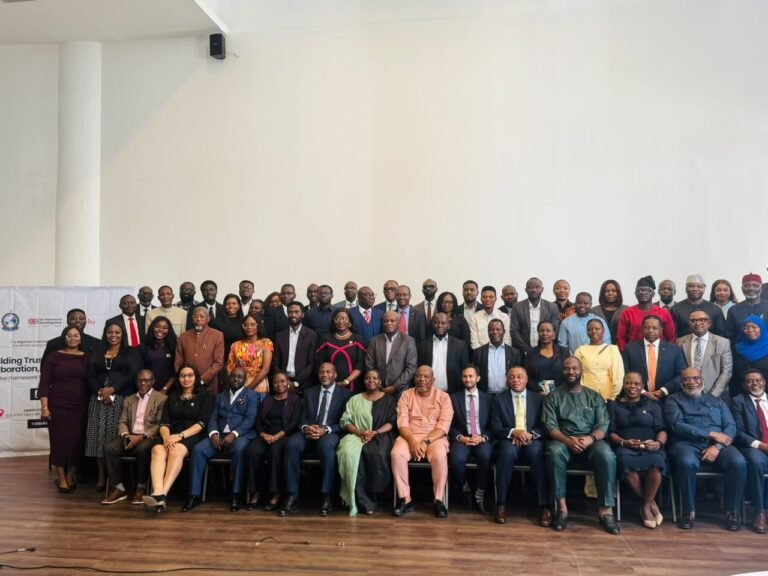
Mughal, speaking at an OpenSpace press conference in Abuja, said Nigeria had the fundamentals to emerge as a major Islamic and ethical finance hub in West Africa, pointing to its large population, entrepreneurial base, developing capital market and growing appetite for alternative financial products.
Insurance could be the next frontier
While banking and Sukuk have dominated Nigeria’s non-interest finance conversation, the expansion of the ecosystem could create greater room for Takaful and other Shariah-compliant insurance solutions.
Islamic finance is built around principles such as transparency, asset-backing, ethical investment and risk-sharing. These principles can also be applied to insurance through Takaful, a cooperative model in which participants contribute to a common pool used to provide mutual protection.
For Nigeria’s insurance industry, a growing non-interest finance market could therefore provide an avenue to reach customers who remain underserved by conventional financial products.
It could also give insurers an opportunity to develop products around agriculture, housing, SMEs, asset financing and other areas where Islamic finance is expanding.
Global market approaches $6 trillion
The opportunity extends beyond Nigeria.
Mughal said global Islamic finance assets reached approximately $5.98 trillion in 2024, bringing the industry close to the $6 trillion threshold.
The scale of the global market suggests that Islamic finance is no longer confined to a niche segment of the financial system.
For African economies, the model could provide additional channels for mobilising capital for infrastructure, agriculture, housing, trade and small businesses.
Nigeria, with one of Africa’s largest populations and a sizeable informal and entrepreneurial economy, is seeking to position itself to capture a greater portion of that capital.
Fintech could accelerate the shift
Mughal said technology would be critical to the next phase of Islamic finance development, arguing that fintech could reduce transaction costs, simplify customer onboarding and make ethical financial products more accessible.
That could be significant for insurers seeking to expand beyond traditional distribution channels.
Digital onboarding, automated customer verification, electronic documentation, payment technology and data analytics could make it easier to distribute Shariah-compliant financial and insurance products to SMEs, market traders, young entrepreneurs and households.
The convergence of fintech and Islamic finance could also encourage financial institutions to develop integrated products combining asset financing, investment and protection.
OpenSpace plans non-interest products
OpenSpace is among the companies seeking to tap into the emerging opportunity.
The company plans to develop non-interest products based on structures including Murabaha, Ijarah and Diminishing Musharakah.
Murabaha involves financing an asset through a disclosed cost-plus-profit arrangement, while Ijarah uses leasing to provide access to productive assets. Diminishing Musharakah provides a gradual ownership structure through which a customer progressively acquires an asset from a financier.
The company also plans to seek the necessary regulatory licences for non-interest financing and could subsequently explore a Sukuk issuance.
Such a move could potentially expand funding options for fintech businesses while providing investors with additional exposure to Nigeria’s growing non-interest capital market.
AI enters the ethical finance race
OpenSpace CEO Titus Adakole Ikeh said the company intends to combine ethical finance with technology to make financial services more accessible and transparent.
The company’s proposed ecosystem includes a unified customer information file, wallet engine and investment pool engine, alongside automated Know-Your-Customer verification, customer assessment, payment collection, digital documentation and electronic signatures.
Ikeh also said artificial intelligence and machine learning would be used for customer analytics, portfolio monitoring, anomaly detection and personalised financial services.
For insurers, the development illustrates how rapidly the broader financial-services ecosystem is changing. As technology lowers distribution costs and improves risk assessment, insurance providers may increasingly need to compete for customers within integrated financial platforms rather than through standalone products.
Regulatory support will be crucial
Nigeria’s non-interest finance market has benefited from the development of regulatory infrastructure, with the Central Bank of Nigeria supporting non-interest banking while the Securities and Exchange Commission has contributed to the development of the Sukuk market.
The next challenge will be translating that momentum into a broader ecosystem that includes insurance, fintech, investment management and other financial services.
For the insurance industry, the opportunity could be substantial—but capturing it will require products that are commercially viable, digitally accessible and designed around the needs of Nigeria’s underserved population.
With the global Islamic finance industry nearing $6 trillion and Nigeria’s domestic non-interest market already running into trillions of naira, the country’s Islamic finance ambitions could soon become an important growth story for the insurance sector as well.