



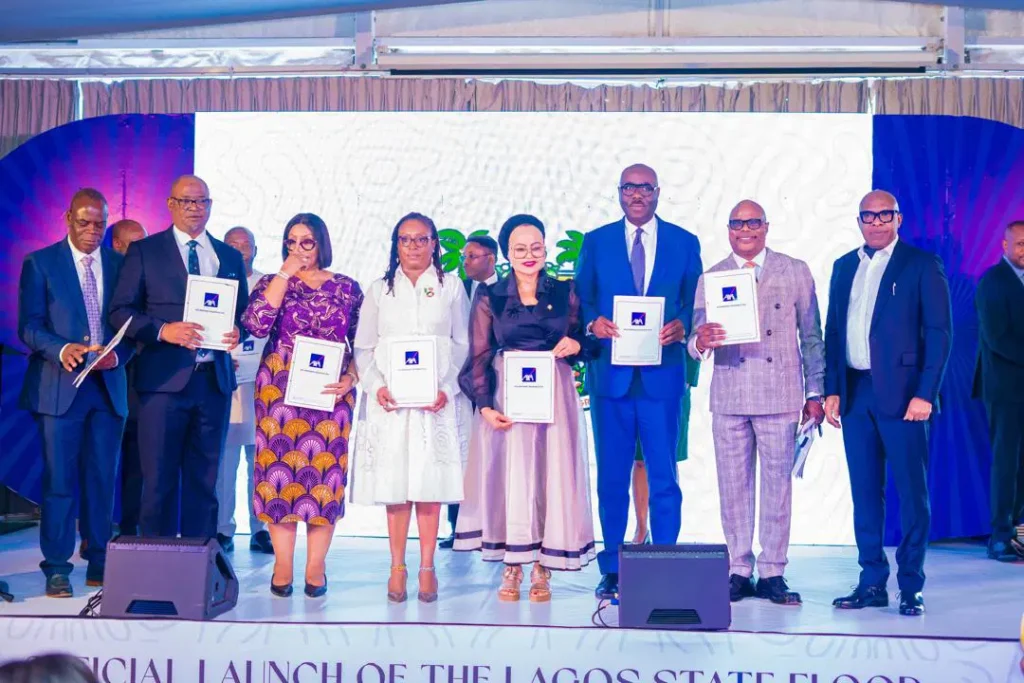
Efforts to address the growing threat of flooding in Lagos have received a significant boost with the introduction of a Flood Risk Insurance Project aimed at enhancing disaster preparedness, financial resilience, and rapid response mechanisms across the state.
The initiative, driven through a collaboration between the Lagos State Government, international development partners, and private sector stakeholders, seeks to provide sustainable protection for vulnerable communities against the adverse effects of flooding.
As one of Africa’s fastest-growing urban centres, Lagos faces increasing flood risks linked to rapid urbanisation, unplanned development, inadequate drainage systems, poor waste management practices, rising sea levels, and climate change–induced extreme rainfall.
Communities such as Ajah and Amuwo-Odofin have experienced recurrent flooding over the years, leading to significant damage to homes, businesses, infrastructure, and public utilities.
To mitigate these challenges, stakeholders have adopted an innovative insurance-led approach that differs from conventional disaster response frameworks. Central to the model is the use of parametric insurance, which enables automatic payouts once predefined triggers—such as rainfall intensity or water level thresholds—are met.
This mechanism is expected to facilitate faster access to emergency funding, reduce reliance on emergency borrowing, accelerate infrastructure recovery, and improve support for affected residents.
Industry experts have described the initiative as one of the first large-scale flood risk insurance programmes of its kind in Africa, positioning Lagos as a leader in climate risk financing and urban resilience strategies.
The insurance industry is playing a pivotal role in the development and execution of the project. Sunlight Insurance Brokers has been appointed as the lead insurance broker, with key representatives contributing to the project team.
Their responsibilities include structuring risk-financing frameworks for major public infrastructure projects, liaising with global insurance and reinsurance markets, providing technical advisory services on flood risk exposure, and supporting the long-term sustainability of the scheme.
Observers note that such collaboration is essential in bridging the gap between policy formulation and implementation, particularly in climate adaptation initiatives that require both financial expertise and technical capacity.
Flooding continues to impose substantial economic and social costs on Lagos, including property damage, disruption to commercial and transportation activities, and increased public expenditure on emergency response and rehabilitation.
Stakeholders believe the Flood Risk Insurance Project will help mitigate these impacts by establishing a more predictable and sustainable funding framework for post-disaster recovery.
They also emphasised that the long-term success of the initiative will depend on sustained data collection, improved risk modelling, enhanced public awareness, community engagement, effective regulatory oversight, and broader participation from the insurance sector.
If successfully implemented, the Lagos model could serve as a template for integrating insurance into climate adaptation and infrastructure protection strategies across other African cities facing similar environmental risks.