





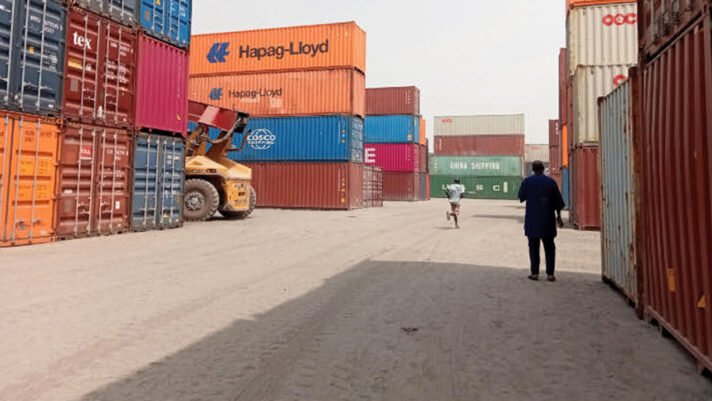
Foreign shipping companies operating in Nigeria are reportedly continuing to demand container deposits and detention charges from importers and freight forwarders despite provisions of the Nigeria Insurance Industry Reform Act, 2025, designed to replace the practice with a mandatory container insurance framework.
The development has raised concerns among importers and clearing agents, who say the continued charges are adding to the cost of doing business and creating additional pressure on cargo owners.
Under Section 203 of the NIIRA 2025, shipping companies are prohibited from demanding upfront deposits from importers and freight forwarders as security for the return of containers. The law also provides penalties exceeding N1m for violations.
The reform was introduced to free up funds tied to refundable container deposits, facilitate cargo clearance and reduce costs associated with port operations.
However, stakeholders say implementation remains a challenge, with container deposits and detention charges allegedly still being imposed more than a year after the legislation came into force.
Importers pay up to N400,000
Importers and clearing agents reportedly pay about N200,000 for a 40-foot container within Lagos, while the charge can rise to N400,000 for containers moved outside the state.
Stakeholders also complain about difficulties obtaining refunds after containers are returned. In some cases, shipping companies have reportedly attributed refund delays to late container returns or alleged damage to the equipment.
There are also concerns that no shipping company has so far been sanctioned for allegedly contravening the provision, despite continued reports of container deposit demands and detention charges.
Empty-container bottlenecks worsen costs
Industry operators have linked the problem partly to inadequate facilities for receiving empty containers.
They identified limited holding bays, slow truck turnaround times and congestion along major port access routes as some of the factors making it difficult for importers and their agents to return containers within prescribed periods.
The National President of the Africa Association of Professional Freight Forwarders and Logistics of Nigeria, Frank Ogunojemite, said inadequate holding bays and designated collection points were creating bottlenecks around the Tin Can and Apapa port corridors.
According to him, the shortage of receiving facilities delays cargo movement and truck turnaround, leaving importers exposed to additional detention costs.
Ogunojemite questioned why importers should bear financial penalties when delays are allegedly caused by inadequate facilities provided by shipping companies.
Freight forwarders demand enforcement
He called on shipping companies to provide sufficient holding bays and empty-container collection centres and to suspend detention charges where importers are unable to return containers because receiving facilities are unavailable.
Ogunojemite also called for compensation for importers and freight forwarders who incurred losses from avoidable delays, alongside stronger enforcement of service standards and sanctions against operators found to be creating unnecessary bottlenecks.
Meanwhile, former National Secretary of the Association of Nigerian Licensed Customs Agents, Abdulazeez Mukaila, confirmed that foreign shipping lines were still collecting container deposits from importers and their agents.
Mukaila questioned why the relevant authorities had not fully enforced the provisions of the law and also called for greater awareness among importers and other stakeholders about the new regulatory requirements.
He maintained that, despite the legislation, enforcement remained inadequate, allowing container deposit collections to continue at Nigerian ports.
The continuing complaints have renewed calls for stronger regulatory oversight and clearer enforcement of the NIIRA provisions governing container-related charges, particularly as stakeholders seek lower logistics costs and more efficient cargo movement through Nigerian ports.