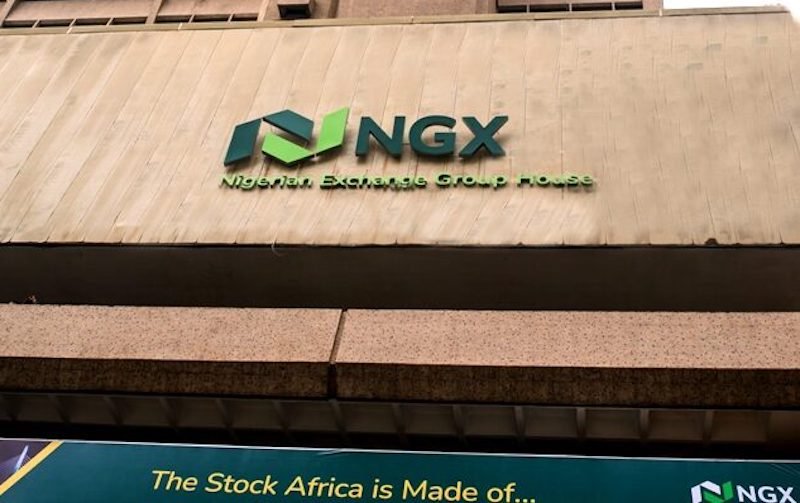
The Nigerian equities market resumed trading after the Eid-ul-Mawlid public holiday on a cautious note, with investors losing about N260 billion in market value as sell-offs in several large- and mid-cap stocks dragged the market lower.
The Nigerian Exchange Limited (NGX) All-Share Index fell by 402.25 points, representing a 0.17 per cent decline, to close at 238,682.92 points at the end of Wednesday’s session.
With the latest decline, the market’s month-to-date return stood at -2.7 per cent, while its year-to-date gain moderated to 53.4 per cent.
Similarly, overall market capitalisation dropped by N260 billion to N154.137 trillion, reflecting the pressure on equities following the market’s reopening after the public holiday.
Sectoral performance was broadly negative, with four major sectors closing in the red. The NGX Insurance Index declined by 0.9 per cent, followed by the Banking Index, which fell 0.4 per cent. The Consumer Goods Index shed 0.3 per cent, while the Oil & Gas Index slipped 0.1 per cent.
The Industrial Goods Index, however, ended the session unchanged.
The downturn was largely attributed to price declines among some large- and medium-capitalised stocks, including FTN Cocoa Processors, Zenith Bank, PZ Cussons Nigeria, Zichis Agro Allied Industry and Oando.
Market breadth also reflected weak investor sentiment. A total of 39 stocks recorded losses, significantly outnumbering the 17 equities that posted gains during the session.
Despite the broader market weakness, some stocks attracted buying interest. Neimeth International Pharmaceuticals emerged as the session’s biggest gainer, rising 9.66 per cent to close at N7.95 per share.
NEM Insurance followed with a 6.67 per cent gain, ending the session at N32 per share, while Regency Alliance Insurance appreciated by 6.25 per cent to close at 85 kobo per share.
The session highlights the uneven performance of the Nigerian equities market, where the broader index remains substantially higher on a year-to-date basis despite recent profit-taking and declines across key sectors.