





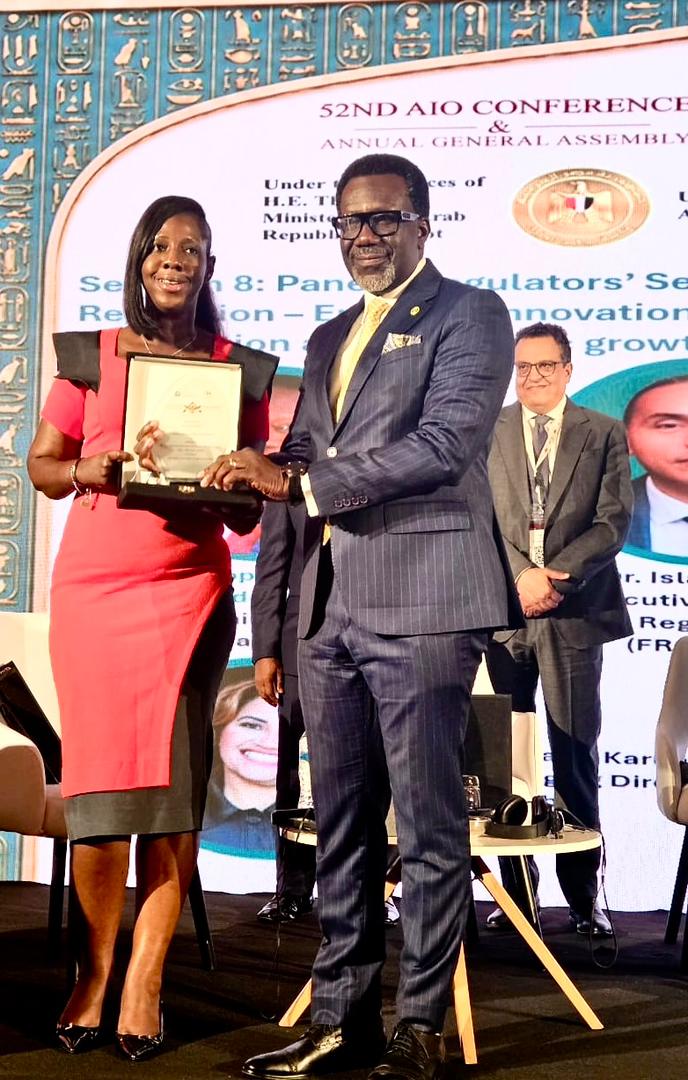
Insurance leaders across Africa have called for urgent regulatory innovation and accelerated digital adoption to bridge the continent’s protection gap and drive inclusive economic growth.
The call was made during a high-level panel session at the 52nd African Insurance Organisation (AIO) Conference held in Cairo, Egypt, where industry stakeholders examined strategies to expand insurance access across underserved populations.
Among the key speakers was Nigeria’s Commissioner for Insurance and Chief Executive Officer of the National Insurance Commission (NAICOM), Olusegun Ayo Omosehin, who stressed that Africa’s low insurance penetration should be viewed as a significant growth opportunity rather than a constraint.
According to him, the continent already generates an estimated $68 billion in insurance premiums, reflecting strong demand in areas where services are accessible.
“The challenge is not a lack of willingness to pay, but our ability to design and distribute products that effectively reach people where they are,” Omosehin said.
Panelists identified distribution inefficiencies as a major barrier, noting that traditional agent-based models fail to reach as much as 90 percent of the potential market, particularly within rural communities and the informal sector.
To address this gap, stakeholders advocated for a shift toward mobile-first strategies, embedded insurance offerings, and community-based delivery channels. Africa’s growing digital infrastructure—comprising more than 500 million mobile subscribers and over 350 million mobile wallet users—was highlighted as a critical enabler for scalable, low-cost insurance solutions.
Regulatory reform also featured prominently in the discussions, with experts urging a transition from rigid rule-based systems to more flexible, principles-based frameworks. Recommendations included the adoption of risk-based capital models and the expansion of regulatory sandboxes to foster innovation.
Nigeria’s ongoing reform agenda under the Nigerian Insurance Industry Reform Act (NIIRA) 2025 was cited as a leading example of progressive regulation aimed at encouraging innovation while maintaining oversight.
While acknowledging the transformative potential of technologies such as artificial intelligence and blockchain, Omosehin cautioned against emerging risks, including data privacy concerns, cybersecurity threats, and algorithmic bias.
Participants agreed that consumer trust remains central to industry growth, emphasizing that innovation and customer protection must go hand in hand.
The session concluded with a call for coordinated action among regulators, insurers, and technology providers to boost insurance penetration to between three and five percent within the next five to seven years, expand access to financial protection, and strengthen economic resilience across the continent.
The conference reaffirmed that Africa’s insurance sector is at a pivotal moment, with the convergence of digital innovation, regulatory reform, and rising demand presenting a unique opportunity for transformation.
The African Insurance Organisation Conference remains the continent’s leading platform for shaping policy direction and advancing collaboration within the insurance industry.