





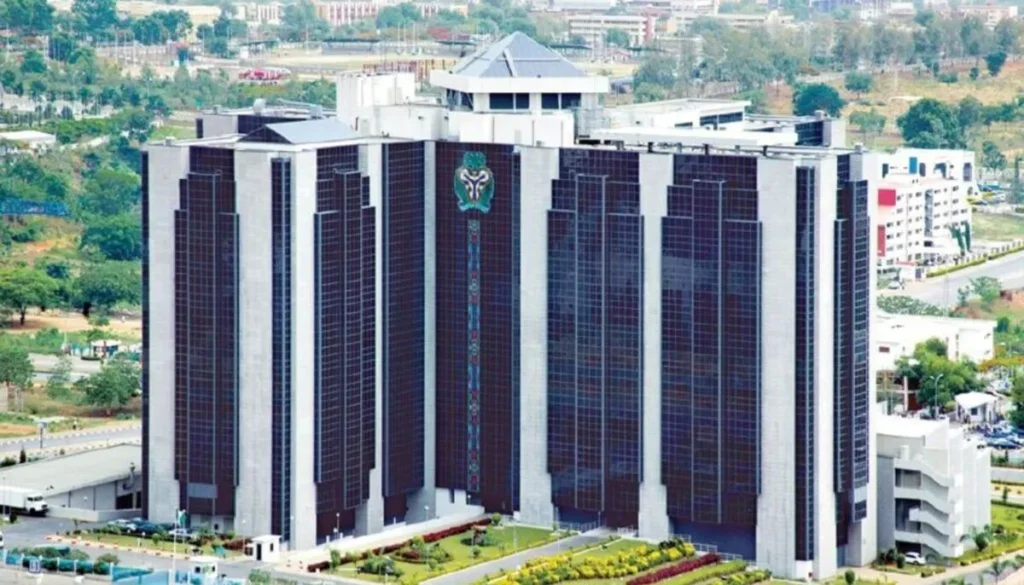
Nigerian banks dramatically increased lending to the finance, insurance and capital market sector in the first quarter of 2026, with total credit climbing to N9.80 trillion by March, according to newly released Central Bank of Nigeria data.
The increase represents one of the more notable movements in sectoral bank lending during the first quarter and could have important implications for Nigeria’s financial services industry, including insurers and other risk-management businesses.
According to the CBN Q1 2026 Statistical Bulletin, credit extended by deposit money banks to the finance, insurance and capital market sector rose from N9.03 trillion in January to N9.16 trillion in February, before accelerating to N9.80 trillion in March.
That means lending to the sector increased by about N770 billion between January and March.
Why the N9.8 Trillion Lending Surge Matters
The increase comes at a time when Nigeria’s financial institutions continue to operate in an environment shaped by inflationary pressures, exchange-rate volatility and relatively high borrowing costs.
For insurance companies, increased access to bank financing could support investment, technology adoption, expansion of distribution networks and the development of new insurance products.
It could also signal growing confidence in financial-sector activities as banks allocate more funds to businesses operating across finance, insurance and capital markets.
However, increased lending does not automatically translate into lower costs or improved profitability. The broader economic environment remains an important factor in determining how effectively businesses can deploy borrowed funds.
Insurance Sector Gets a Boost as Other Industries See Mixed Results
The CBN figures show that the increase in lending was not evenly distributed across the economy.
Credit to trade and general commerce rose sharply from N4.67 trillion in January to N6.29 trillion in March. Construction lending also increased from N2.14 trillion to N2.65 trillion over the same period.
Meanwhile, credit classified under general services rose from N4.75 trillion in January to N5.58 trillion in March.
The oil and gas sector moved in the opposite direction.
Bank credit to oil and gas declined from N10.91 trillion in January to N10.58 trillion in March, representing a reduction of roughly N335 billion.
Manufacturing credit also fell, dropping from N6.57 trillion to N5.77 trillion during the quarter.
Power and energy lending, however, increased from N1.30 trillion to N1.61 trillion.
The contrasting movements suggest that Nigerian banks were not simply increasing lending across every sector, but were reallocating credit among different areas of the economy.
What Could This Mean for Insurance Customers?
For consumers and businesses, developments in bank lending can have an indirect effect on insurance.
Greater financing for businesses can increase demand for property, motor, marine, construction, liability and other commercial insurance products, particularly where insurance is required as part of financing arrangements.
For example, businesses obtaining loans to purchase equipment, construct facilities or expand operations may also need to insure the underlying assets.
A sustained increase in economic activity could therefore create additional opportunities for insurers to grow premiums and deepen coverage.
CBN Rate Cuts May Be Supporting Credit Growth
The lending increase also comes after a series of monetary policy adjustments by the CBN.
In September 2025, the Monetary Policy Committee reduced the Monetary Policy Rate by 50 basis points to 27%. The rate was subsequently maintained at 27% in November.
In February 2026, the CBN cut the benchmark rate again, taking it from 27% to 26.5%.
The reductions were intended to provide some support for economic activity while the CBN continued to manage inflationary pressures.
Although borrowing conditions remain challenging, lower policy rates can gradually influence the cost and availability of credit throughout the banking system.
The Bigger Picture: Credit Across Nigeria’s Economy Is Still Expanding
The latest sectoral figures form part of a broader increase in domestic credit.
Earlier CBN data showed net domestic credit rising to N111.40 trillion in February 2026, up from N109.43 trillion in January.
Private-sector credit also edged higher, increasing from N75.24 trillion in January to N75.62 trillion in February.
Taken together, the figures point to continued expansion in domestic lending despite the difficult operating environment.
For Nigeria’s insurance industry, the key question will be whether this increased flow of capital translates into stronger economic activity, greater asset ownership and ultimately higher demand for insurance protection.
One thing is already clear: the N9.8 trillion credit figure puts the finance and insurance sector firmly among the major beneficiaries of Nigeria’s changing bank-lending landscape.