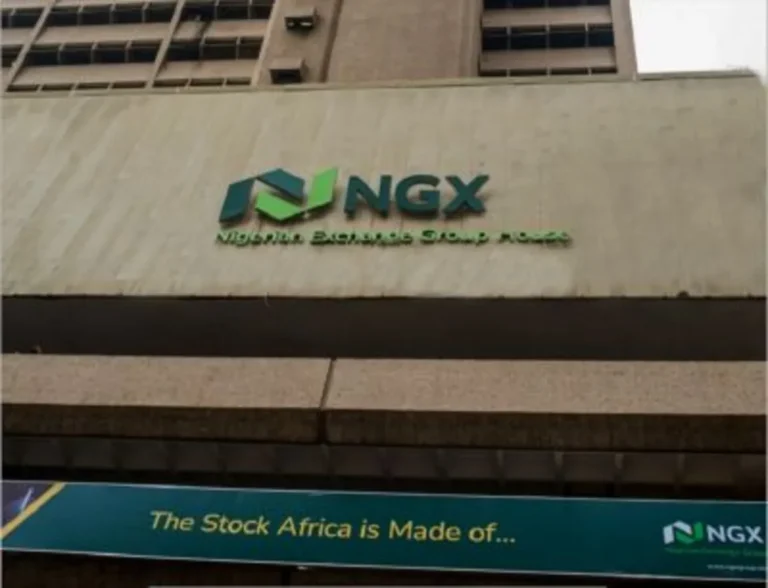






The Nigerian stock market plunged sharply on Monday, wiping out a staggering N945 billion in investor wealth as heavy sell-offs in oil, banking, and insurance stocks triggered a broad market decline.
Data from the Nigerian Exchange shows that the All-Share Index (ASI) fell by 0.60% to close at 243,271.57 points, while total market capitalisation dropped to N156.03 trillion, reflecting sustained bearish sentiment across key sectors.
The downturn was largely driven by aggressive profit-taking in major blue-chip stocks, particularly in the oil and gas and banking sectors. Leading the losses were Aradel Holdings, First HoldCo, Transcorp, and Oando, all of which recorded significant declines and dragged the broader market lower.
Insurance stocks were not spared, as the sector continued to face selling pressure. International Energy Insurance, AXA Mansard Insurance, and Consolidated Hallmark Holdings saw mixed performance, highlighting volatility within the segment as investors rotated funds.
Market breadth painted a grim picture, with 47 decliners compared to just 17 gainers—signaling widespread sell-offs rather than isolated losses.
Among the worst-hit stocks, International Energy Insurance fell by 9.99% to close at N6.40, while eTranzact International dropped 9.97% to N14.90. Neimeth Pharmaceuticals also declined by 9.94%, and Oando recorded a sharp 9.81% drop, making it one of the session’s most influential laggards.
On the upside, a few stocks attracted bargain hunters. Royal Exchange surged by the daily maximum of 10.00%, while Ikeja Hotel rose by 9.97%. Consolidated Hallmark Holdings and AXA Mansard Insurance also posted notable gains, offering limited relief within an otherwise bearish market.
Sectoral performance remained broadly negative. The Oil and Gas index led the losses, falling by 3.2% as easing geopolitical tensions—including the reopening of the Strait of Hormuz—reduced concerns over global crude supply disruptions. The Banking index declined by 1.0%, while the Insurance index slipped by 0.7%, reflecting continued investor caution.
Trading activity showed mixed signals. Total volume traded dropped sharply by 56.7% to 744.99 million shares, and transaction value declined by 31.0% to N36.44 billion. However, the number of deals surged by 62.58% to 80,977 transactions, indicating heightened participation despite weaker turnover.
Sterling Financial Holdings led trading by volume with 112.17 million shares, while Aradel Holdings topped the value chart with transactions worth approximately N11.20 billion.
Despite the current downturn, the market’s year-to-date return remains strong at over 56%. However, analysts warn that continued profit-taking and sector-specific uncertainties—especially in oil and insurance—could keep market sentiment subdued in the near term.
Investors are now closely watching global oil market developments and domestic economic indicators for signals on the market’s next direction. For now, caution dominates, as volatility and sell-offs continue to shape trading patterns on the Nigerian Exchange.