



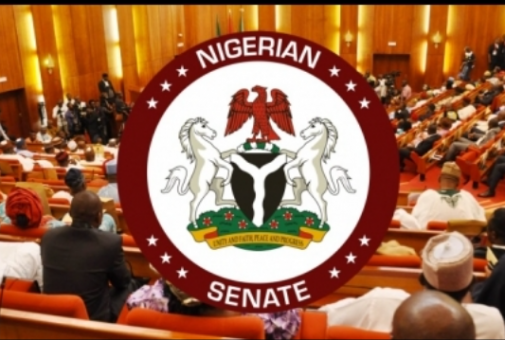
Nigeria’s Senate Committee on Banking, Insurance and Other Financial Institutions has stepped up engagement with financial sector regulators and industry stakeholders as lawmakers seek to strengthen the country’s financial architecture, improve economic stability and accelerate sustainable growth.
The committee held an expanded stakeholders’ meeting in Lagos over the weekend, bringing together senior representatives of the Central Bank of Nigeria (CBN), Nigeria Deposit Insurance Corporation (NDIC), Asset Management Corporation of Nigeria (AMCON), National Insurance Commission (NAICOM) and Nigeria Export-Import Bank (NEXIM), among other key institutions.
The engagement underscores growing legislative attention to the interconnected roles of banking, insurance, financial safety nets and export finance in supporting Nigeria’s broader economic objectives.
Chairman of the Senate Committee, Senator Mukhail Adetokunbo Abiru (Lagos East), represented at the meeting by Senator Osita Izunaso (Imo West), reaffirmed the Senate’s commitment to pursuing reforms and strengthening cooperation between lawmakers and financial sector regulators.
Abiru said the financial sector remained central to investment mobilisation, job creation, business expansion and macroeconomic stability, making effective coordination among regulators and policymakers increasingly important.
He said prevailing economic conditions demanded closer collaboration among the legislature, regulators and other stakeholders, particularly in responding to inflationary pressures, global economic uncertainty and emerging cybersecurity risks.
The senator also identified low insurance penetration and the need to diversify Nigeria’s export base as areas requiring sustained policy attention.
For the insurance industry, the emphasis on deeper institutional collaboration comes amid broader efforts to expand financial inclusion and strengthen the sector’s contribution to economic development.
Abiru noted that monetary policy, financial safety nets, banking-sector soundness, insurance-market development and export financing were closely connected elements of a stable financial system.
“The effectiveness of monetary policy, the strength of our financial safety nets, the soundness of our banking institutions, the vibrancy of the insurance industry and the availability of export finance are all interdependent components of a stable and well-functioning financial architecture.”
The participation of NAICOM alongside the CBN, NDIC, AMCON and NEXIM highlights the growing recognition that insurance must form part of broader financial-sector and economic policy discussions.
Greater insurance penetration could provide households and businesses with stronger mechanisms for managing financial risks, while a more developed insurance market could support investment and improve the resilience of businesses against economic shocks.
The Senate’s engagement also points to a potentially closer relationship between financial-sector regulation and legislative reform as Nigeria seeks to respond to domestic economic pressures and changes in the global financial environment.
With cybersecurity threats, inflation, financial inclusion and economic diversification featuring prominently in the discussions, stakeholders are expected to continue examining how regulatory and legislative reforms can strengthen confidence in Nigeria’s financial system.
The latest engagement signals the Senate’s intention to maintain dialogue with regulators and industry experts as it considers reforms aimed at building a more resilient, inclusive and sustainable financial sector.
.