




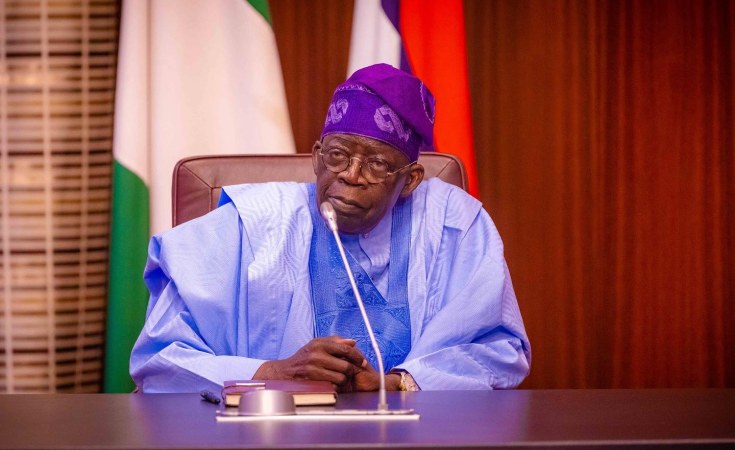
President Bola Ahmed Tinubu has asked the Senate to approve a fresh $516.3 million external loan to support the construction of the Sokoto–Badagry Superhighway, a major infrastructure project under his administration’s Renewed Hope Agenda.
The request, presented in a letter read during plenary by Senate President Godswill Akpabio, proposes securing the facility from Deutsche Bank AG, with insurance backing from the Islamic Corporation for the Insurance of Investment and Export Credit.
According to the president, the loan will finance the development of a 1,000-kilometre highway linking Sokoto to Badagry, passing through Kebbi, Niger, Kwara, Oyo, Ogun, and Lagos states. The project is expected to improve connectivity between the North-West and South-West regions and open up a significant economic corridor across the country.
Tinubu noted that the proposed borrowing is already included in the federal government’s previously approved borrowing plan. He added that the government will also contribute ₦265 billion as counterpart funding for land acquisition, compensation, and related infrastructure.
The loan is structured with a nine-year tenure, including a grace period of up to three years, and an interest rate pegged at the Chicago Mercantile Exchange (CME) SOFR plus 5.3 percent annually.
This latest request comes shortly after lawmakers approved a broader $6 billion external borrowing plan by the administration. Of that amount, $5 billion is expected from First Abu Dhabi Bank to support the national budget, while a $1 billion export finance facility arranged by Citibank will fund the rehabilitation of key port infrastructure in Lagos.
However, the move has reignited concerns over Nigeria’s rising debt profile. Data from the Debt Management Office indicates that the country’s public debt exceeded ₦87 trillion (about $113 billion) as of mid-2023, with figures continuing to rise due to new borrowings and exchange rate fluctuations.
While Nigeria’s debt-to-GDP ratio remains relatively moderate, analysts have warned that the country’s low revenue base poses a significant risk, as a large share of government income is already spent on debt servicing.
Global institutions such as the International Monetary Fund (IMF) and the World Bank have advised the government to focus on boosting revenue generation, improving tax collection, and ensuring that borrowed funds are directed toward productive investments.
Following the presentation, the Senate President referred the request to the Senate Committee on Local and Foreign Debts for further review, with a directive to report back within one week.