




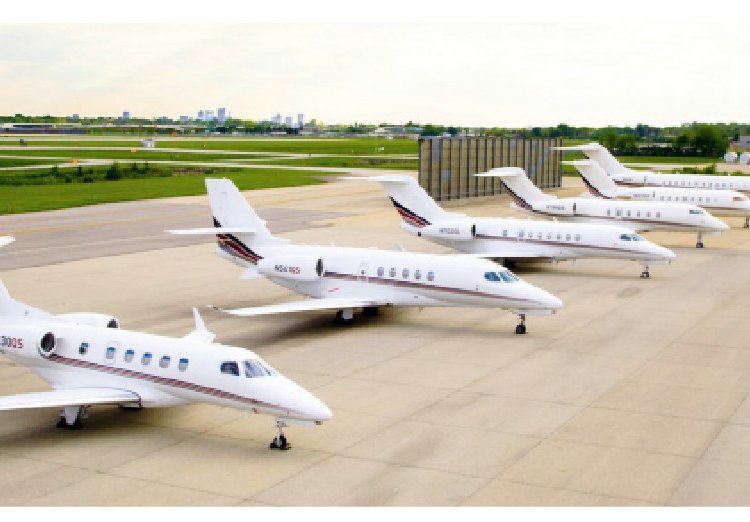
HNigeria could face additional revenue losses and aviation safety risks as political activities ahead of the 2027 general elections drive up demand for private jet travel, raising concerns about the possible expansion of unlicensed charter operations.
The Federal Government is already estimated to have lost about N120 billion over the past decade to illegal private jet charter activities, according to findings by the Ministerial Task Force on Illegal Private Charter Operations.
Aviation stakeholders warn that increased movement by politicians, party officials, government representatives and corporate executives during the electioneering period could encourage some private aircraft owners to operate commercial flights without the required licences and regulatory approvals.
The practice allegedly involves holders of Permits for Non-Commercial Flight (PNCF), which are intended for private use, offering aircraft for hire and reward without meeting the requirements applicable to authorised commercial charter operators.
Beyond potential losses in taxes and regulatory charges, stakeholders say the practice could undermine licensed aviation businesses and expose passengers to safety, insurance and legal risks.
Election Campaigns Could Fuel Illegal Operations
An aviation analyst, Dr James Oduadu, said the expected increase in demand for private air travel during political campaigns could encourage more unauthorised charter operations unless regulators strengthen enforcement.
He noted that campaign activities often require rapid transportation to destinations that may have limited scheduled airline services. With a limited number of aircraft holding valid Air Operator Certificates (AOCs) for charter operations, the gap between demand and available legal capacity could create opportunities for unauthorised operators.
“From a market and operational perspective, the concern is valid. Electioneering campaigns historically create a sharp surge in demand for on-demand air transport, particularly to destinations that are not well served by scheduled operations,” Oduadu said.
He warned that without deliberate intervention, some PNCF holders could enter the illegal charter market during the campaign period.
According to him, the attraction of speed, privacy and cash-based transactions, combined with perceptions of weak enforcement at some secondary airports, could contribute to the problem.
Oduadu also cautioned that passengers using unauthorised charter services might not receive the protections associated with properly regulated commercial operations.
He said such aircraft might not meet the applicable requirements for commercial insurance, safety oversight, crew training and maintenance compliance under Nigerian aviation regulations.
The analyst advised individuals and organisations seeking private air transport to verify an operator’s AOC status before engaging its services.
He also recommended obtaining appropriate charter documentation, confirming insurance coverage and reporting suspected illegal operations to the relevant authorities.
Licensed Airlines Face Unfair Competition
The Chief Executive Officer of Centurion Aviation Security Services, retired Capt. John Ojikutu, said the growing preference for private aircraft among politicians, senior public officials and business executives was affecting demand for premium seats on scheduled domestic flights.
According to him, some domestic airlines have complained that first-class and business-class seats remain unoccupied as high-profile travellers increasingly opt for private aviation.
Ojikutu argued that private aircraft owners offering commercial services should be subject to the same applicable safety and security requirements as licensed operators.
He warned that unauthorised charter activities could take business away from domestic airlines and further weaken their revenue base.
He also expressed concern that financial pressure on airlines could affect their ability to meet obligations to government agencies and ground-handling service providers.
Ojikutu urged the Nigerian Civil Aviation Authority (NCAA) to ensure that aircraft engaged in commercial operations comply with the relevant Nigerian Civil Aviation Regulations.
Foreign-Registered Aircraft Raise Security Questions
Ojikutu also called for closer scrutiny of foreign-registered private aircraft operating in Nigeria, citing concerns about documentation, security clearances and compliance with the conditions attached to their approvals.
He said regulators and security agencies should verify aircraft registration documents, crew licences, airworthiness records and other relevant authorisations, particularly where foreign-registered aircraft operate frequently within the country.
He questioned whether all such aircraft had the necessary documentation and clearances for their activities, and urged authorities to establish whether they were operating within the approved conditions and time limits.
The aviation security expert further raised questions about the outcome of an investigation into a foreign-registered aircraft that reportedly diverted to a location different from the airport stated in its flight plan.
He also referred to a separate incident in which an aircraft door reportedly detached during flight, calling for clarification on the circumstances and whether the aircraft had complied with applicable operational and technical requirements.
Ojikutu said the authorities should establish whether the relevant safety checks, crew requirements and other regulatory obligations had been met in such cases.
Tax Evasion Allegations and Regulatory Gaps
A former Nigerian Airways pilot, Capt. Muhammed Gbadamasi, said the alleged abuse of non-commercial flight permits by private aircraft owners had persisted for decades, blaming the situation on weak enforcement, political considerations and inadequate coordination among government agencies.
He alleged that some aircraft owners obtained PNCF permits because they were less expensive than approvals required for commercial operations, but subsequently used the aircraft to provide paid services.
According to Gbadamasi, the practice could enable operators to avoid certain taxes, fees and certification requirements applicable to commercial aviation.
He also alleged that some operators evade the mandatory five per cent ticket sales tax and submit questionable insurance documents to regulatory authorities.
Gbadamasi identified the alleged misuse of Temporary Import Permits (TIPs) as another potential source of revenue loss.
He claimed that some aircraft imported temporarily remained in Nigeria beyond the approved period without the payment of applicable permanent import duties.
He further alleged that offshore company structures and foreign aircraft registrations could make it difficult for authorities to establish beneficial ownership and determine the tax obligations of some aircraft owners.
According to him, certain operators allegedly use foreign registration to claim foreign charter status during inspections, potentially avoiding applicable Value Added Tax, customs duties and other statutory payments.
Gbadamasi blamed the persistence of these practices partly on inadequate information sharing among the NCAA, the Nigeria Customs Service (NCS) and the Federal Inland Revenue Service (FIRS).
He said poor coordination could prevent authorities from identifying aircraft that have overstayed temporary import approvals and assessing outstanding liabilities promptly.
He also alleged that some influential aircraft owners resort to legal challenges to delay enforcement and tax recovery proceedings.
Government Enforcement Measures
Despite his criticism of regulatory enforcement, Gbadamasi acknowledged that the Federal Government had taken steps to address some alleged violations.
He said the Nigeria Customs Service had increasingly grounded aircraft whose owners failed to meet statutory import-duty obligations. He also referred to court-ordered forfeitures involving luxury aircraft linked to customs violations and other infractions.
According to him, the government had introduced stricter document-revalidation exercises requiring operators to present valid registration certificates and flight-operations compliance documents to retain their operational approvals.
Gbadamasi called for stronger cooperation between the NCAA and other relevant agencies to identify defaulting aircraft, enforce compliance and ground those that fail to meet statutory tax and regulatory requirements.
The concerns highlight the challenge facing aviation regulators as Nigeria approaches another election cycle: meeting rising demand for private air travel while ensuring that operators comply with licensing rules, tax obligations, insurance requirements and safety standards.